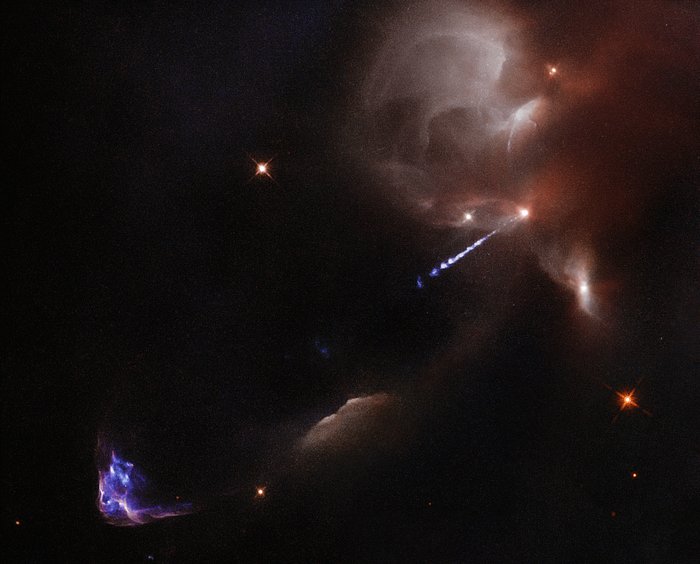
 The star is in its earliest stage of formation. It's a Herbig–Haro (HH) object.
Their existence is brief in cosmic terms (1000's of years).
Evolutionary Protostar
HH 34
(ESA/Hubble)
HH 34
(ESA/Hubble)
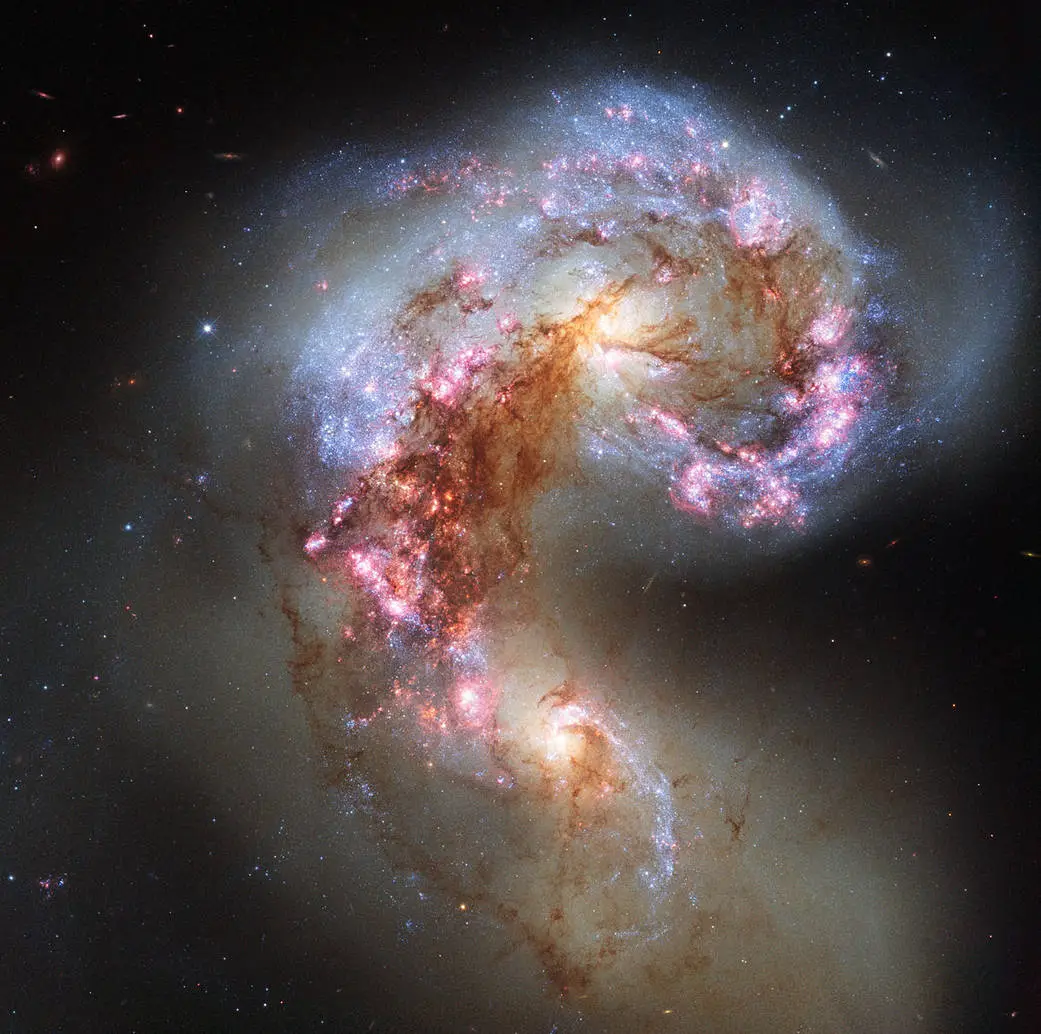 These spiral galaxies are forever colliding. They house many lovely Type O Stars.
They also sport Tidal Tails and engage in Starburst Activities.
Antennae Galaxies
(NGC 4038 and NGC 4039)
(ESA/Hubble)
(NGC 4038 and NGC 4039)
(ESA/Hubble)
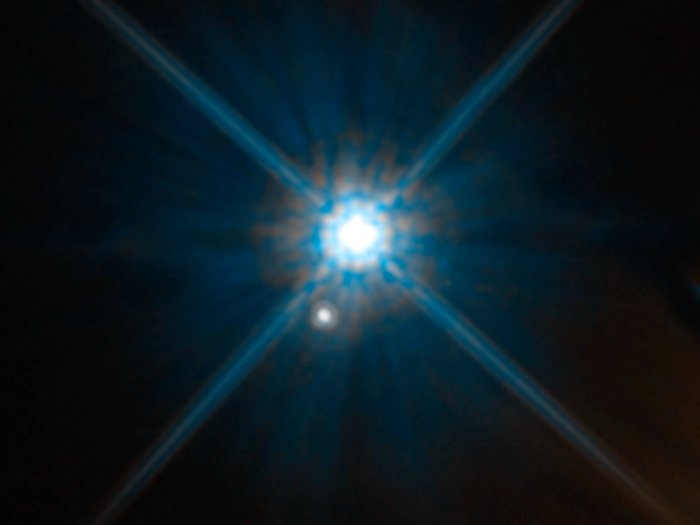 Stein 2051 is relatively close to Earth, only 17 light-years away.
Its tiny companion is a bit farther, 5000 light-years away.
White Dwarf
Stein 2051
(Hubble Archives)
Stein 2051
(Hubble Archives)
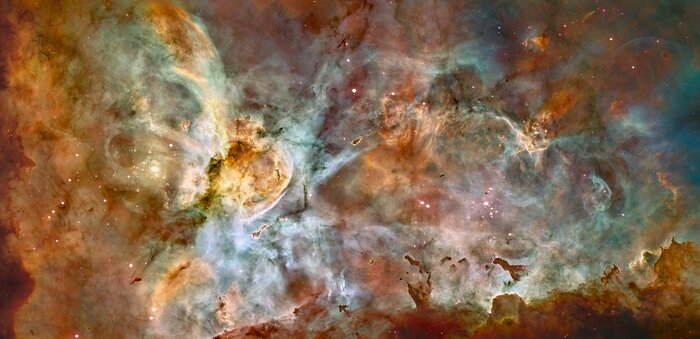 A.K.A. NGC 3372, is the home of Trumpler 14 and Trumpler 16. The Trumplers
are open, young clusters. These clusters contain many extraordinarily
hot, massive O-type stars.
O-Type Stars
Carina Nebula
(ESA/Hubble)
Carina Nebula
(ESA/Hubble)
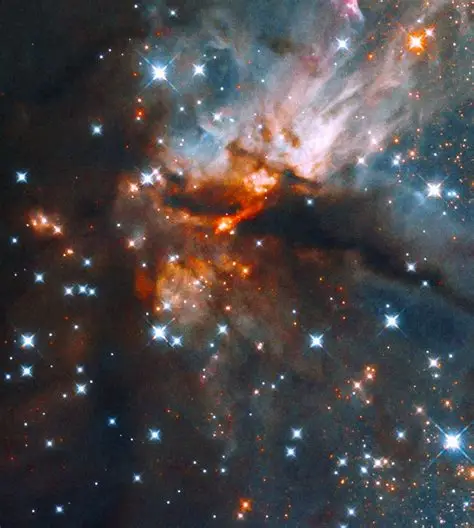 It's located in the Small Magellanic Cloud (SMC). It boasts a whopping
2,500 newborn and infant stars. Bragging rights extend to her beautiful,
bright, blue massive stars as well.
B-Type Stars
NGC 346 Nebula
(ESA/Hubble)
NGC 346 Nebula
(ESA/Hubble)
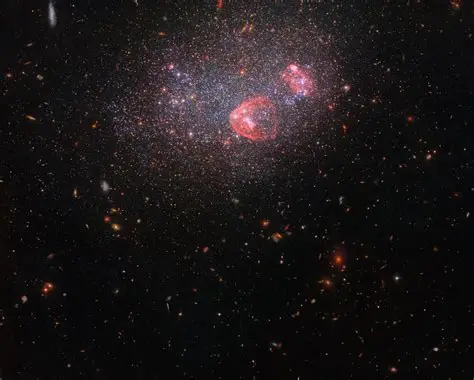 This billion star galaxy (UGC 8091) is considered an "irregular galaxy".
It's a dwarf galaxy about 7 million light-years from Earth. It appears
as a tangle of string lights instead of an elliptical or spiral shape.
B-Type Stars
Hubble Globe of Stars
(ESA/Hubble)
Hubble Globe of Stars
(ESA/Hubble)
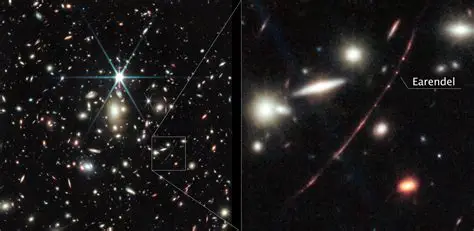 A.K.A WHL0137-LS is a star, or star cluster found in the constellation of Cetus. It's 28 billion
light-years (8.6 billion parsecs) away. If it is a single star, it's the farthest known star.
B-Type Star
Earendel
(ESA/WEBB)
Earendel
(ESA/WEBB)
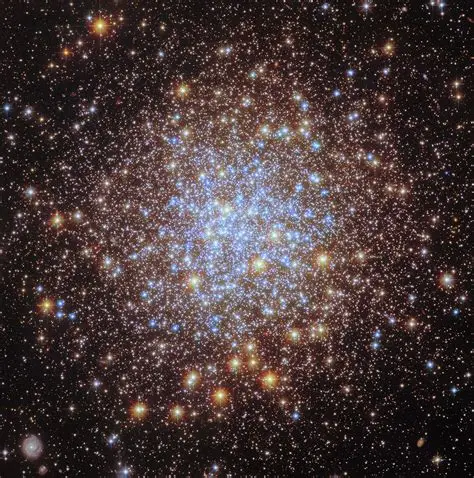 Messier 72 is a collection of stars located in the Aquarius Constellation.
It's about 50,000 light-years from Earth.
B-Type Stars
Glittering Cluster
(ESA/Hubble)
Glittering Cluster
(ESA/Hubble)
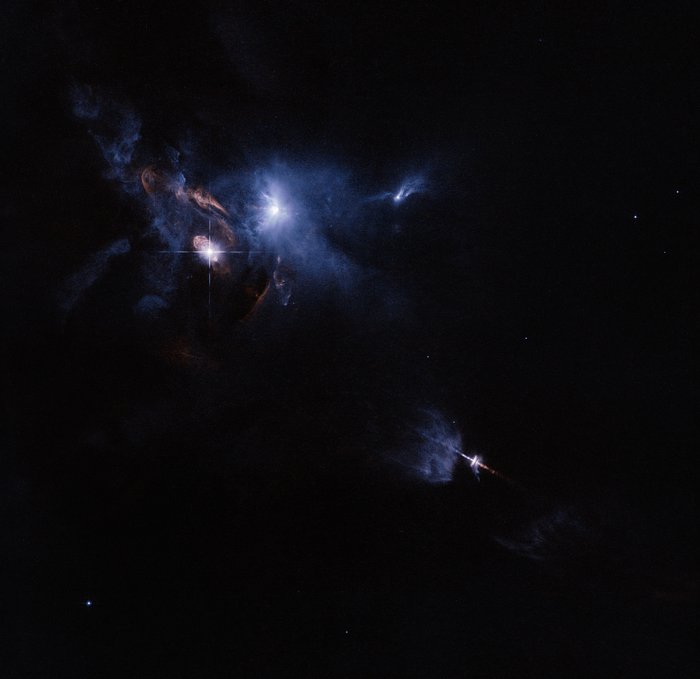 This youngling is growing up in the constellation Taurus.
It's located 450 light years from Earth.
Young Stellar Object
LDN 1551, XZ Tauri
(ESA/Hubble)
LDN 1551, XZ Tauri
(ESA/Hubble)
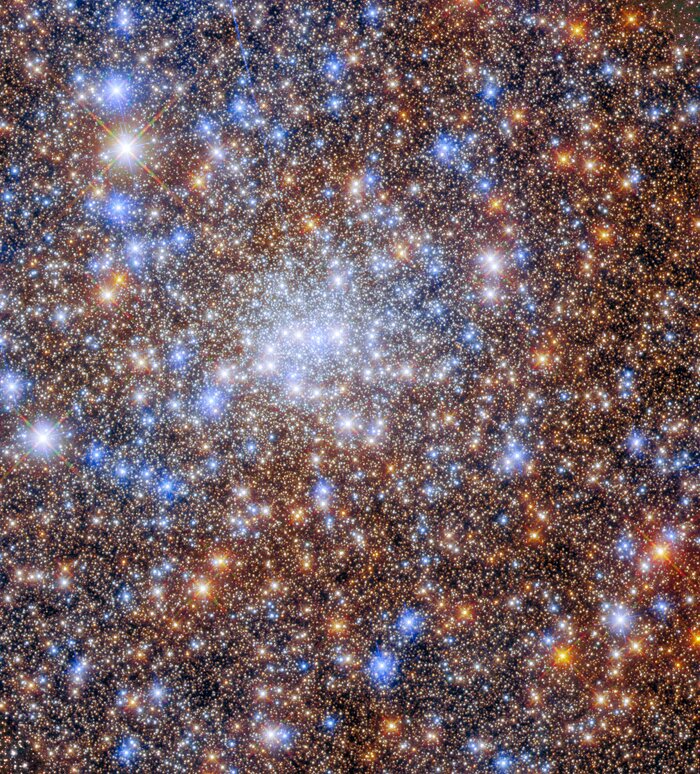 Stars that are bound by their gravitational attraction are called globular clusters.
Terzan 4's heart is a dense and packed field of stars.
Globular Cluster
Terzan 4
(ESA/Hubble)
Terzan 4
(ESA/Hubble)
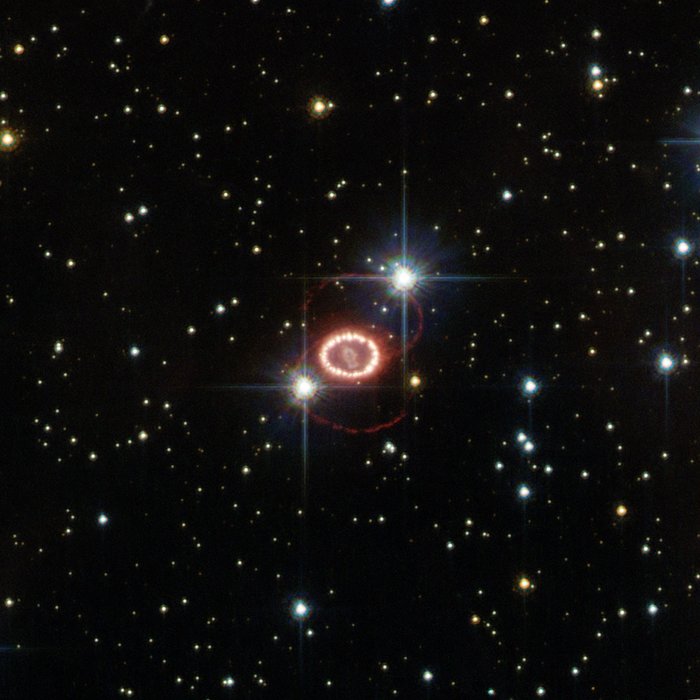 This dying star gifted us with a brilliant stellar explosion. It leaves
behind a neutron star or black hole (stellar remnant).
Supernova
SN 1987A
(ESA/Hubble Archives)
SN 1987A
(ESA/Hubble Archives)
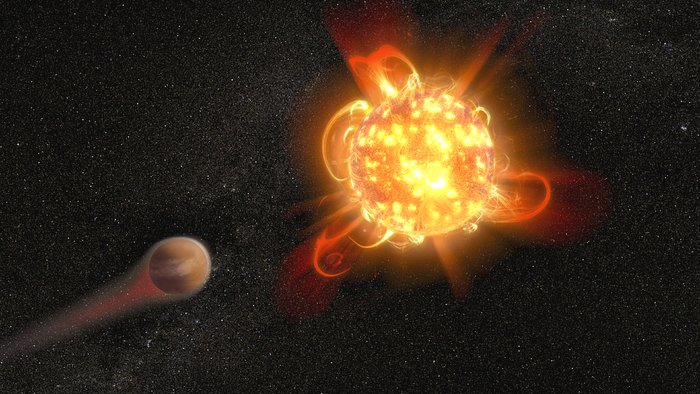 The artist conveys the violence of a red dwarf stripping away an orbitting planet's atmosphere.
Young Red Dwarf
Artist's Illustration
(ESA/Nasa)
Artist's Illustration
(ESA/Nasa)
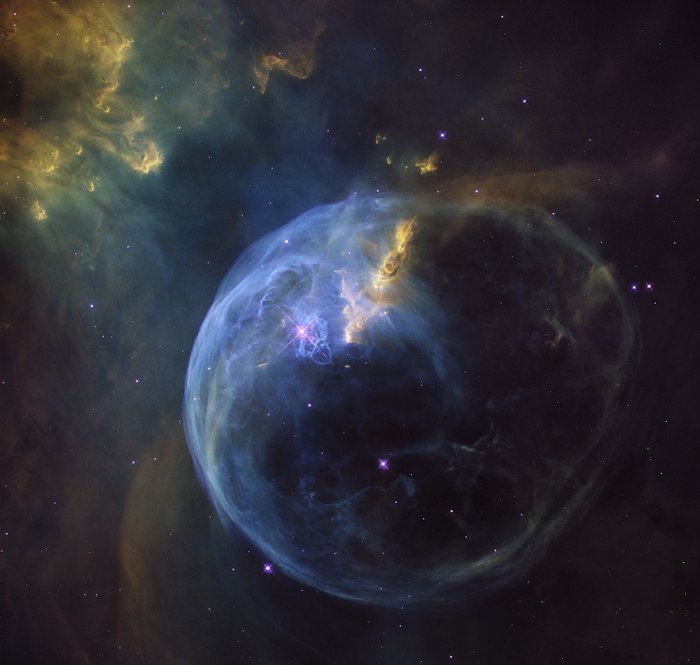 This beauty is located about 8,000 light-years from Earth in the Cassiopeia Constellation.
Stellar winds from a huge, hot, youngster create the "bubble".
Bubble Nebula
NGC 7635
(ESA/Hubble/STScI)
NGC 7635
(ESA/Hubble/STScI)
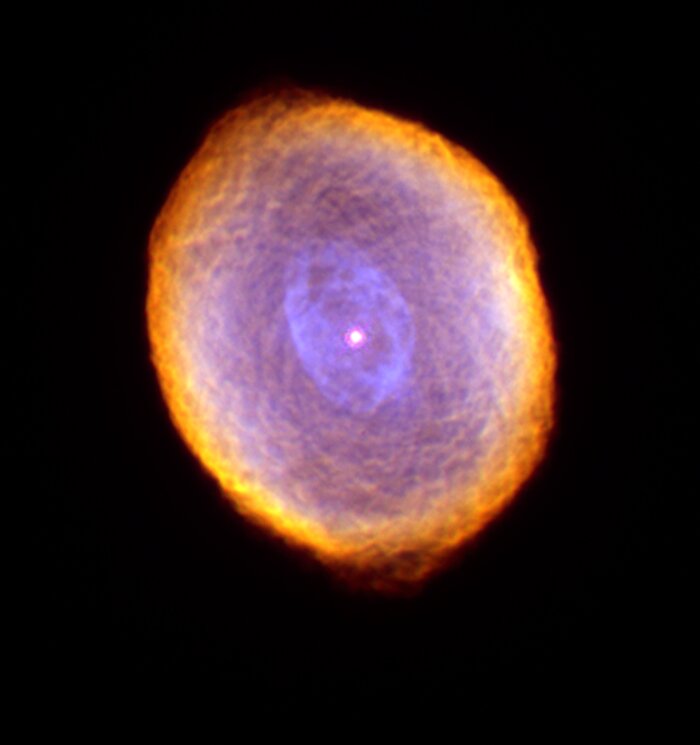 The nebula is about 2000 light-years from Earth. It reside in the Lepus
Constellation.
Spirograph Nebula
IC 418, IRAS 05251-1244
(ESA/Hubble)
IC 418, IRAS 05251-1244
(ESA/Hubble)
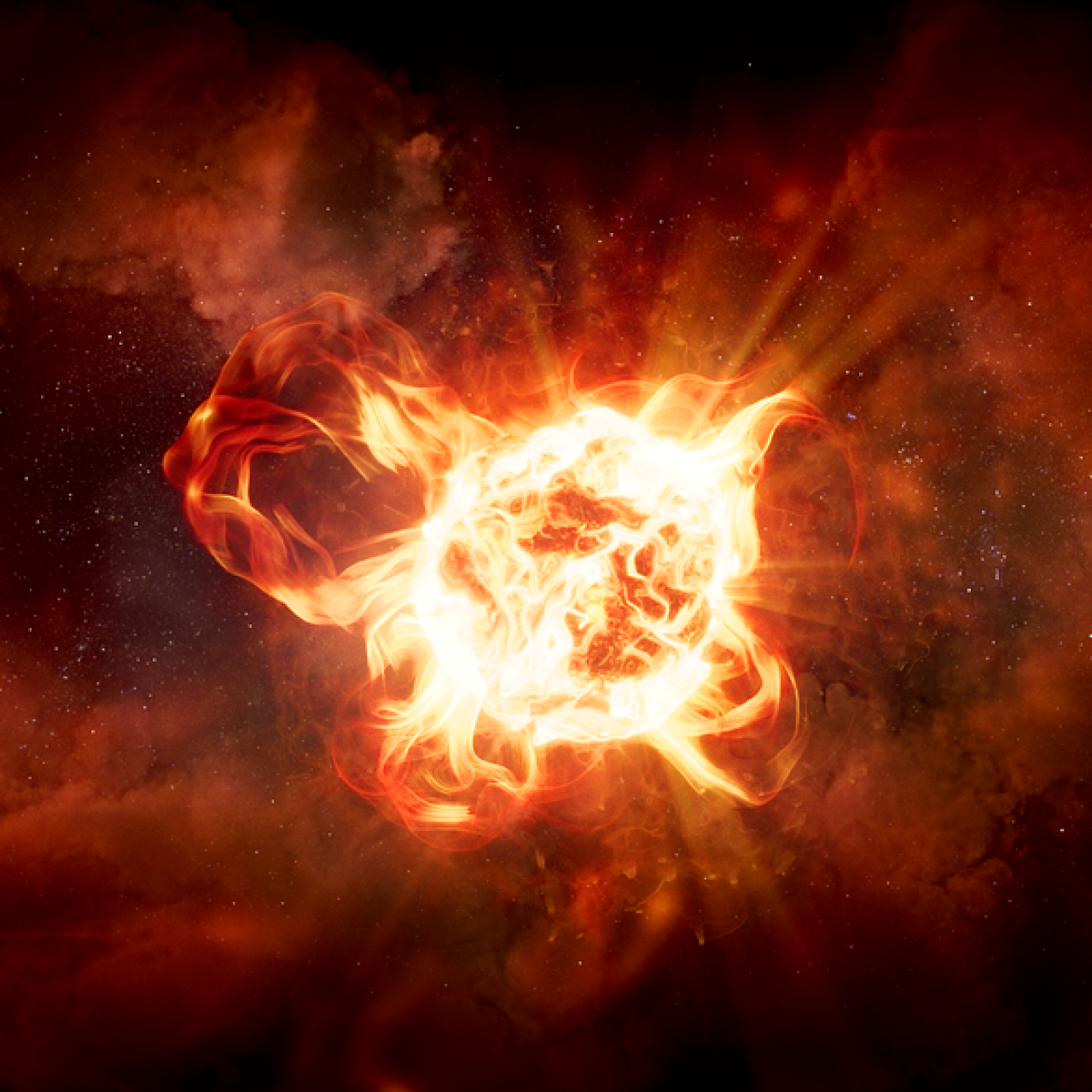 This red hypergiant is nearing the end of its life. It's expected to end
in a supernova. It's one of the largest known stars by radius.
Variable Star
VY Canis Majoris
(ESA/Hubble)
VY Canis Majoris
(ESA/Hubble)
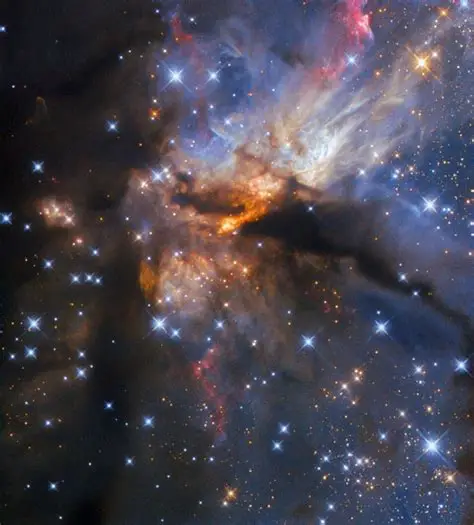 These regions have birth rates at 10 to 100 times the normal rate.
B-Type Stars
Starburst Region
(ESA/Hubble)
Starburst Region
(ESA/Hubble)
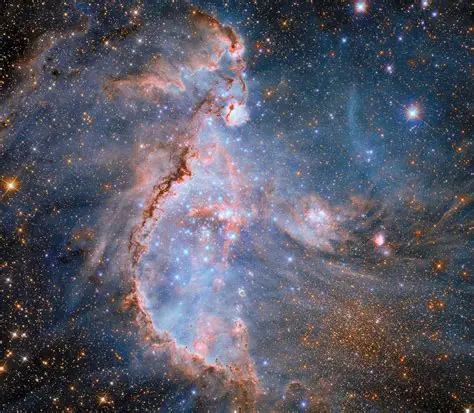 A.K.A. Stellar Nursery. It has dense, cold clouds of cosmic dust and molecular hydrogen gas.
Gravity causes all this material to collapse and form Protostars.
B-Type Stars
Star Formation Region
(ESA/Hubble)
Star Formation Region
(ESA/Hubble)
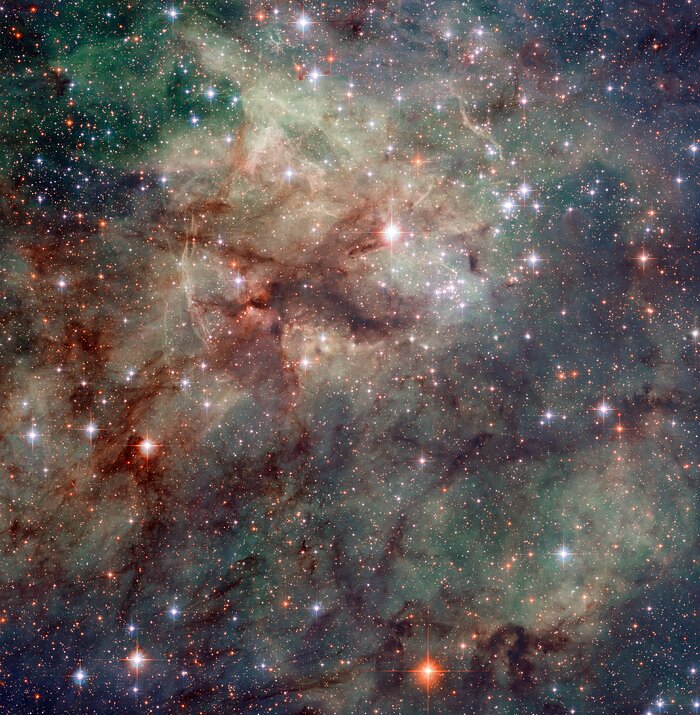 It resides in the Dorado Constellation. It boasts the brightest and largest
star-forming region in our space "neighborhood". The hottest and most massive
stars ever found reside in this nebula.
A-Type Stars
Tarantula Nebula
(ESA/Hubble)
Tarantula Nebula
(ESA/Hubble)
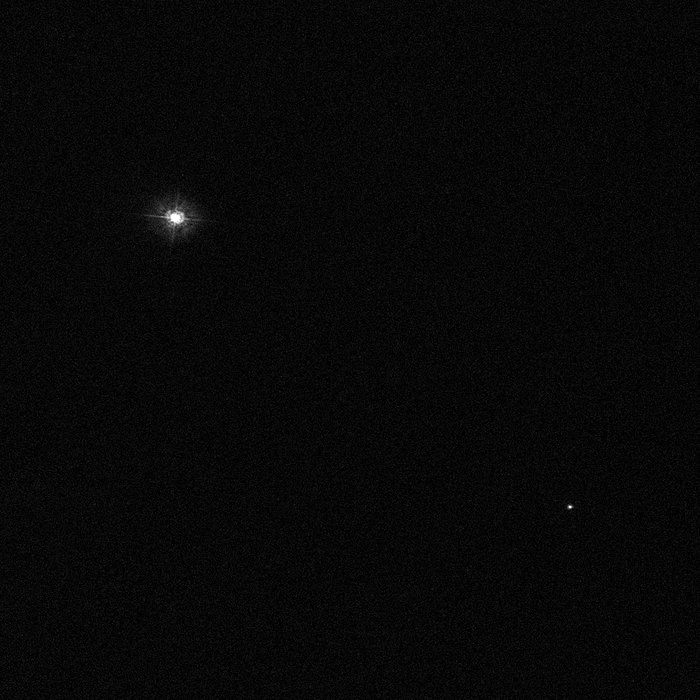 "The North Star" is a multiple star system. Polaris A is the supergiant. She
has a small sister, the dwarf star Polaris B. The middle-child is Polaris Ab and
she's forver in big A's orbit and shy.
F-Type Star
Polaris A (B too)
(ESA/Hubble)
Polaris A (B too)
(ESA/Hubble)
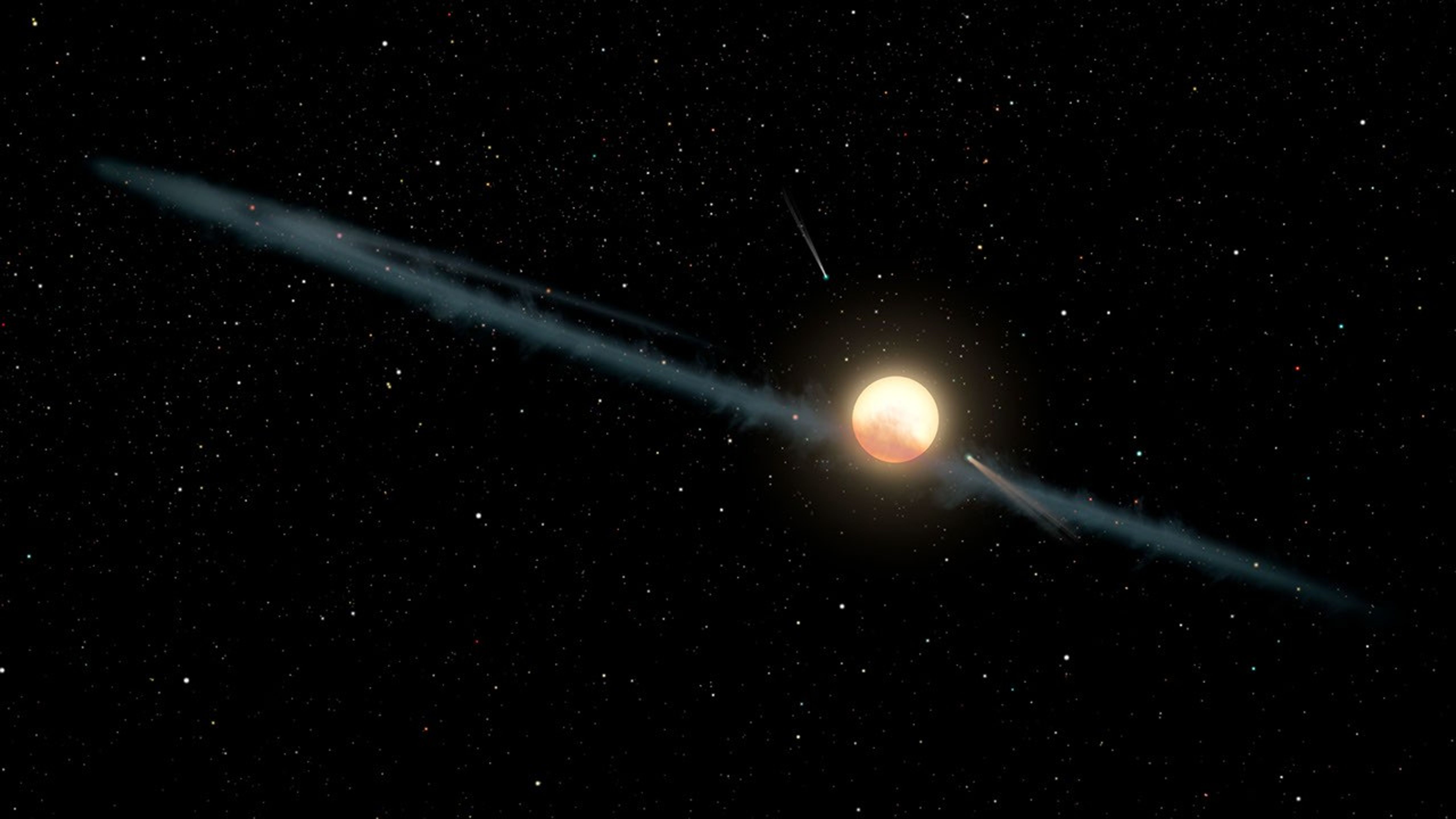 This lovely illustration features a hot, white or yellow-white star. They
account for 3% of the stars in our galaxy.
F-Type Star
Tabby's Star (Nasa Illustration)
Tabby's Star (Nasa Illustration)
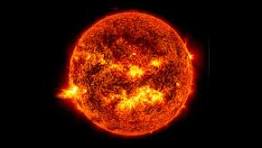 Our star lies in the center of the Solar System. It formed around 5 billion years ago.
It's a G-type main-sequence star (G2V).
G-Type Star
The Sun
(ESA/Hubble)
The Sun
(ESA/Hubble)
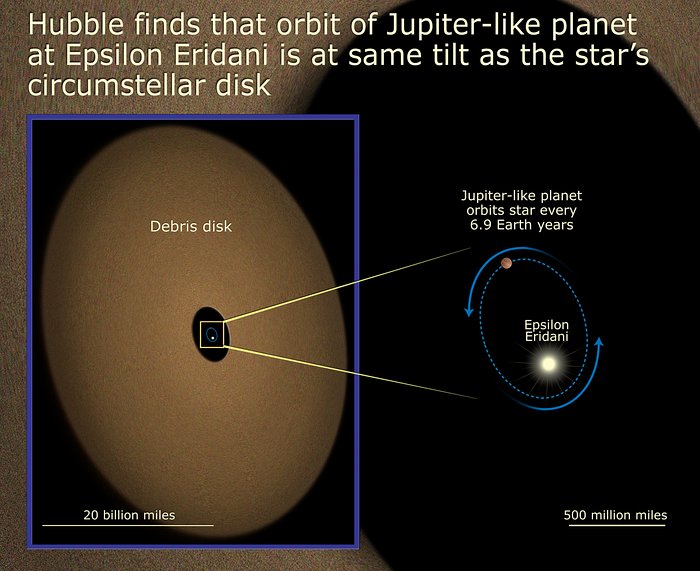 A.K.A. Ran, is an orange dwarf star. It resides in the constellation
Eridanus and is only 10.5 light-years from Earth. It's visible to the
naked eye and around 800 million years old.
K-Type Star
Epsilon Eridani
(ESA/Hubble)
Epsilon Eridani
(ESA/Hubble)
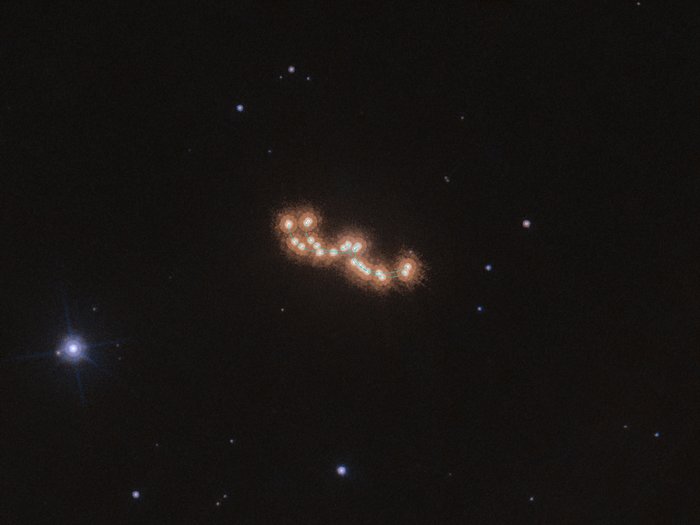 12 Images stacked over 3 years to give us the waltz of two brown dwarfs.
Brown Dwarfs (Waltzing)
Luhman 16A, 16AB, & 16B
(ESA/Hubble)
Luhman 16A, 16AB, & 16B
(ESA/Hubble)
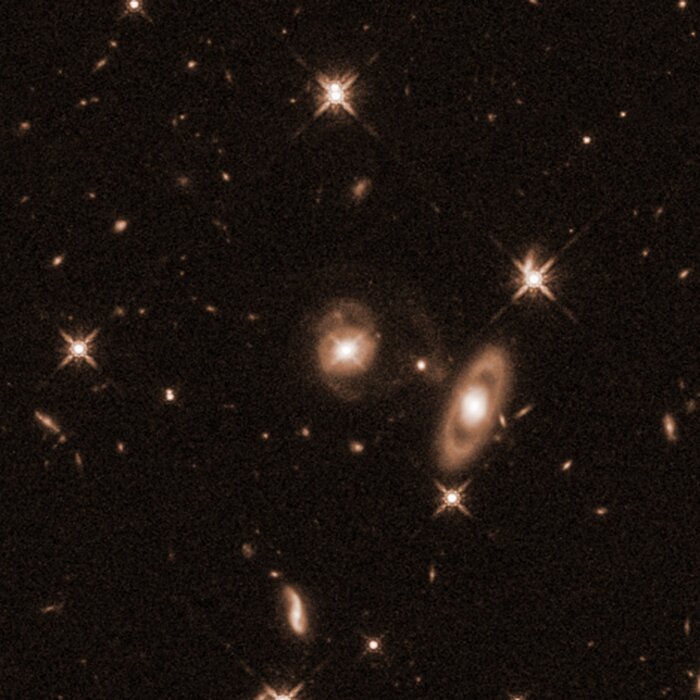 Unlike other quasars, J0742+2704 retains clear spiral arms. It resides in an
intact spiral galaxy with a central massive black hole. Newborn radio jets have
made their appearance.
Gemini Constellation
Quasar J0742+2704 (center)
(ESA/Hubble)
Quasar J0742+2704 (center)
(ESA/Hubble)
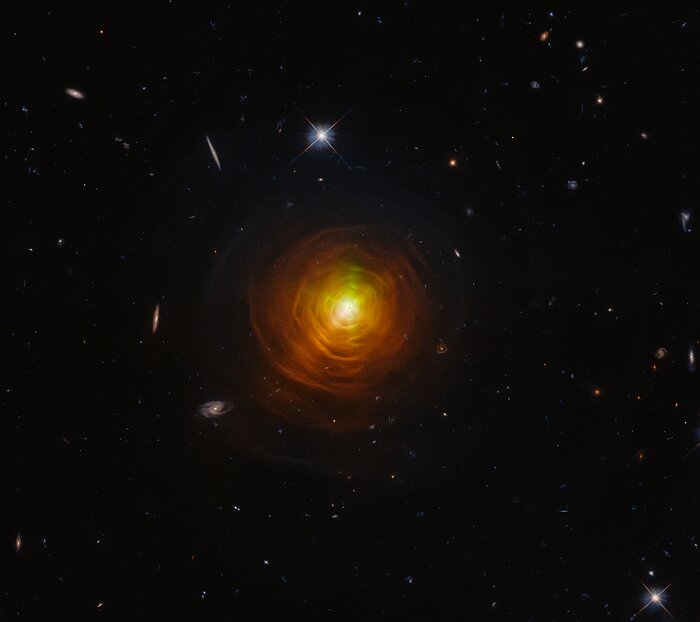 CW Leonis resides in the constellation Leo, around 400 light-years from Earth.
It's a bright red giant boasting a carbon-rich atmosphere.
Carbon Star
CW Leonis
(ESA/Hubble)
CW Leonis
(ESA/Hubble)
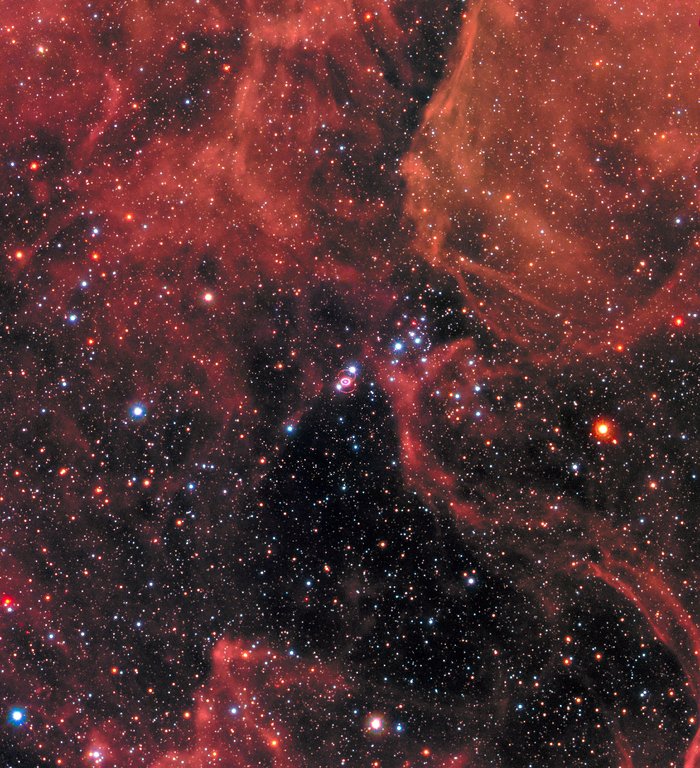 The remnant is located at the center of the image. The image was captured
using the Wide Field Camera 3 (WFC3).
Supernova Remnant
SN 1987A
(ESA/Hubble)
SN 1987A
(ESA/Hubble)
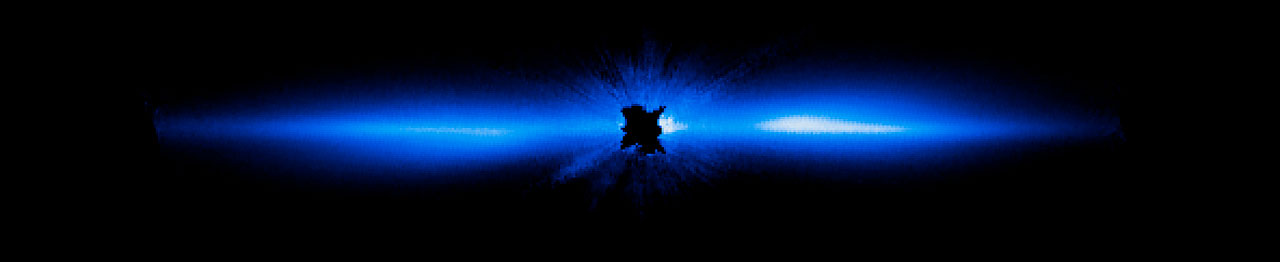 Beta Pictoris is a 20 million year old star. It's surrounded by a gas & dust disc.
Stellar Debris Disc
Beta Pictoris
(ESA/Hubble)
Beta Pictoris
(ESA/Hubble)
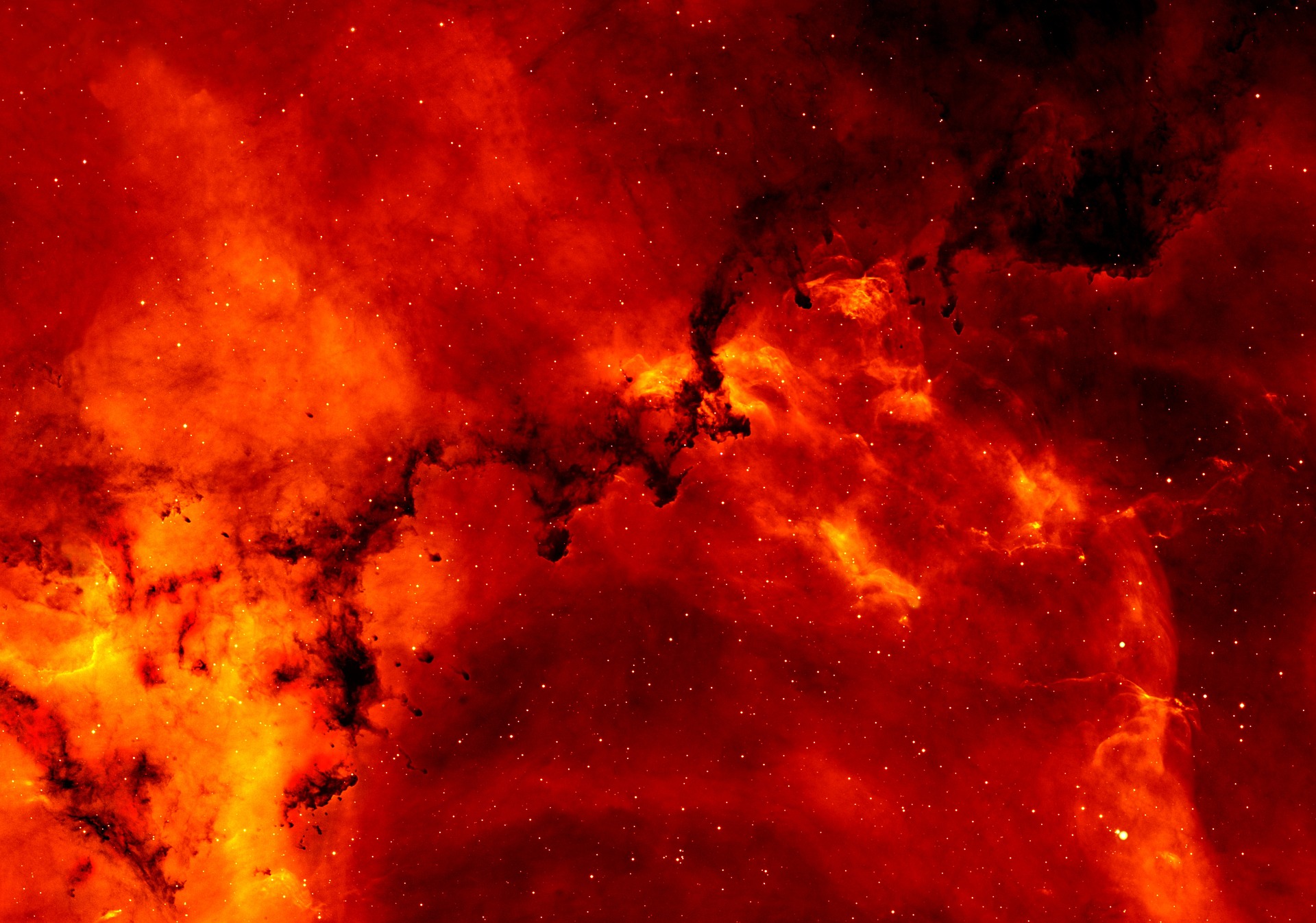 I don't have any information about this stellar photo. I liked it and
it matched my theme. I hope you like it too.
Galaxy of Stars
Pretty Orange Galaxy
(Wiki Images)
Pretty Orange Galaxy
(Wiki Images)
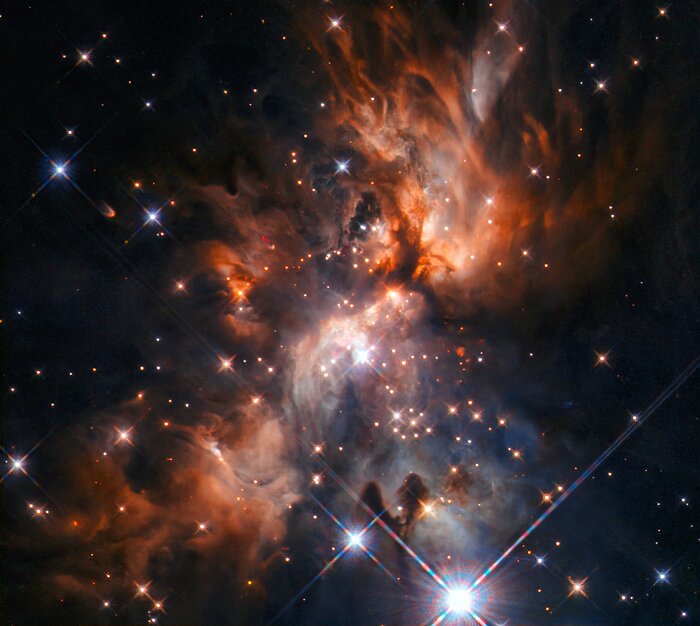 It's located in the "The Twins", the constellation of Gemini. A massive
star is forming in the center and using its jets to blast cavities through
the dust clouds.
Stellar Nursery
AFGL 5180
(ESA/Hubble/Nasa)
AFGL 5180
(ESA/Hubble/Nasa)
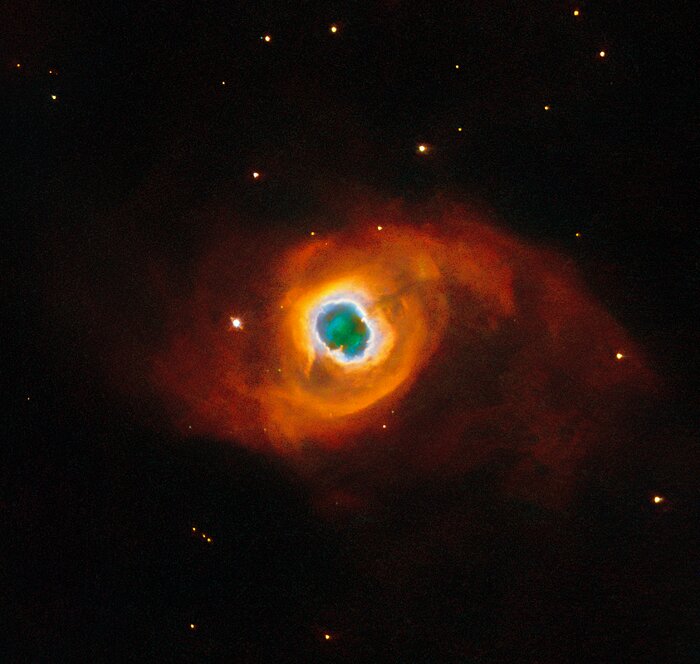 Kohoutek resides 4600 light-years away in the constellation Cygnus (the Swan).
This image was the final work of the Wide Field and Planetary Camera 2 (WFPC2).
Planetary Nebula
Kohoutek 4-55
(ESA/Hubble)
Kohoutek 4-55
(ESA/Hubble)
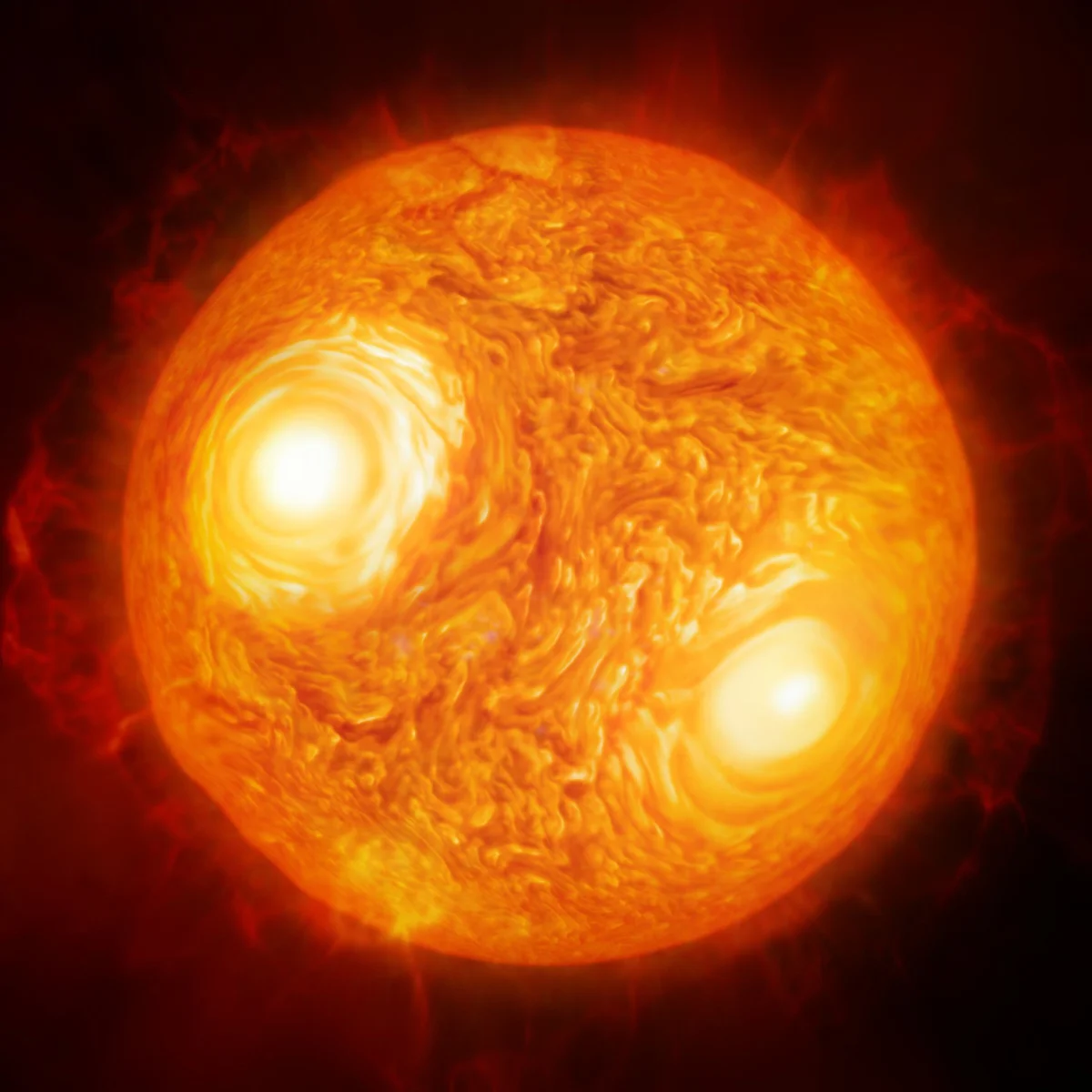 A.K.A. the "Heart of the Scorpion", is a massive red supergiant. It's the
primary in a binary system located in the Scorpius Constellation.
It's the brightest star in Scorpius.
M-Type Star
Antares A
(ESO)
Antares A
(ESO)
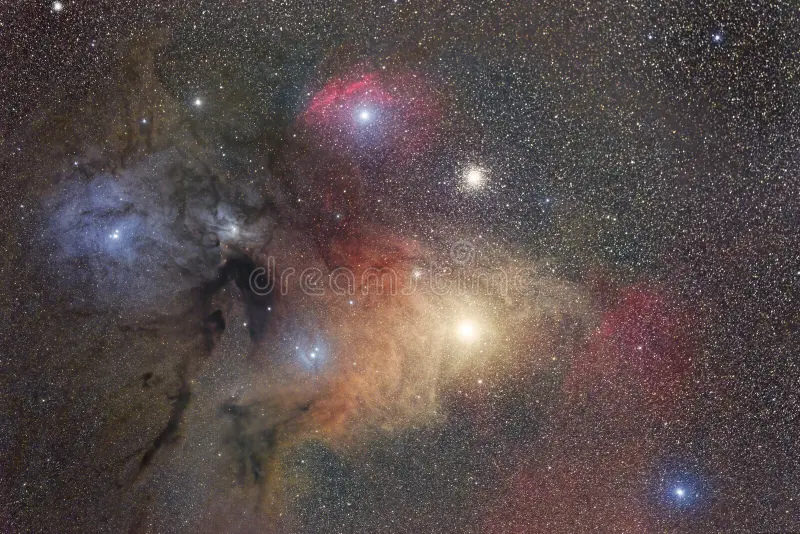 Its heart is Antares (Alpha Scorpii).This enormous M-Type red supergiant
has a cool surface temperature of 3,500 Kelvin, or about.
M-Type Stars
Antares Region
(ESA/Hubble)
Antares Region
(ESA/Hubble)
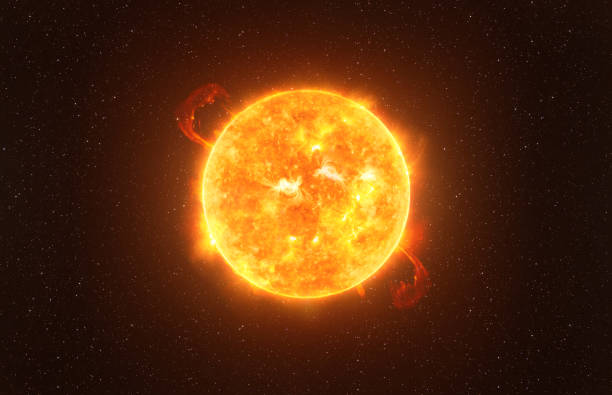 Betelgeuse is experiencing the "Great Dimming". B's burned through their fuel
and is nearing the end of their life. They're not alone. Siwarha, A.K.A. Beetle Buddy,
is always circling and providing companionship.
M-Type Star
Betelgeuse(Red Supergiant)
(ESA/Hubble)
Betelgeuse(Red Supergiant)
(ESA/Hubble)
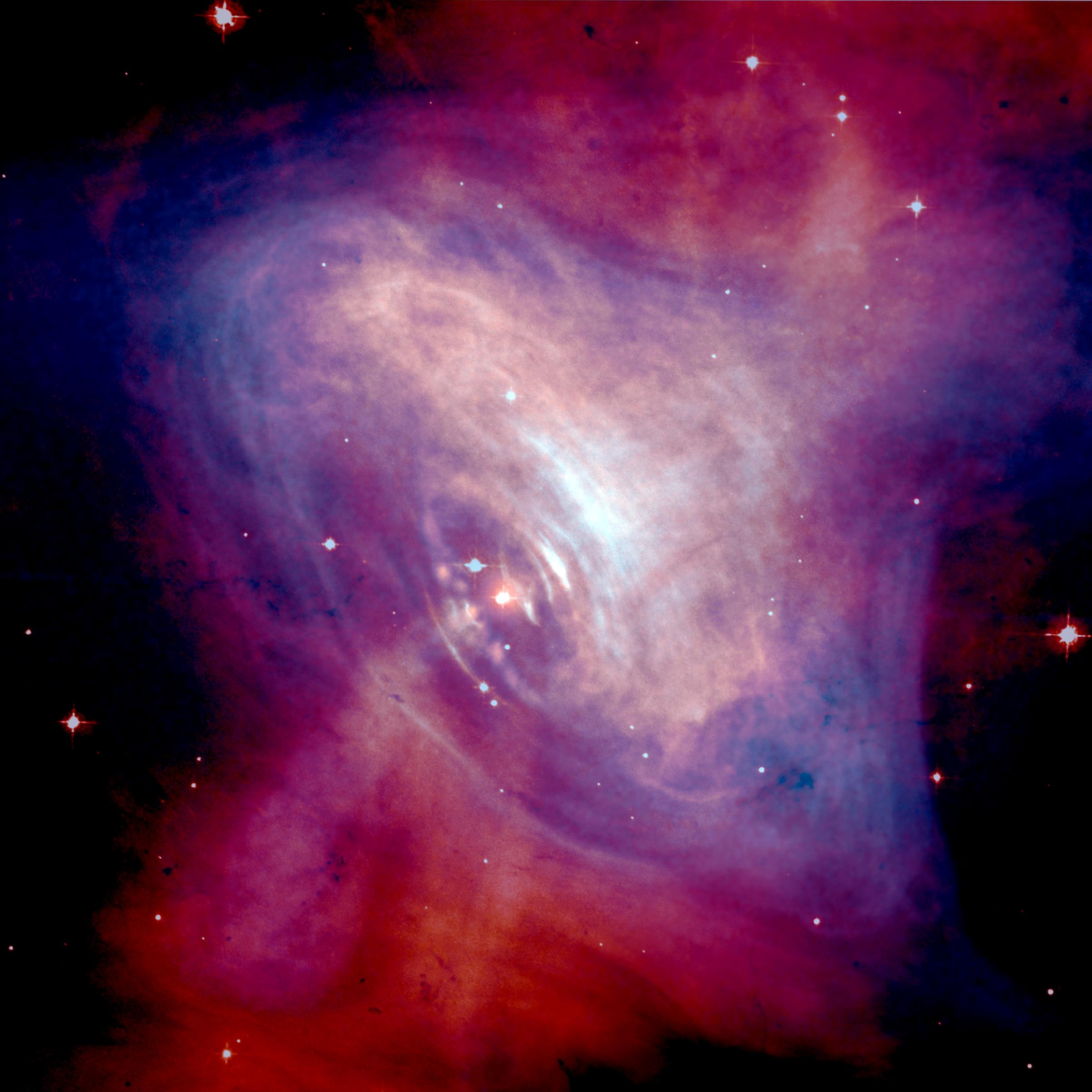 A neutron star that spins about 30 times every second. In 1054 a supernova
explosion was recorded by astronomers. This is its leftover core.
Crab Pulsar
Center of Crab Nebula
(ESA/Hubble)
Center of Crab Nebula
(ESA/Hubble)
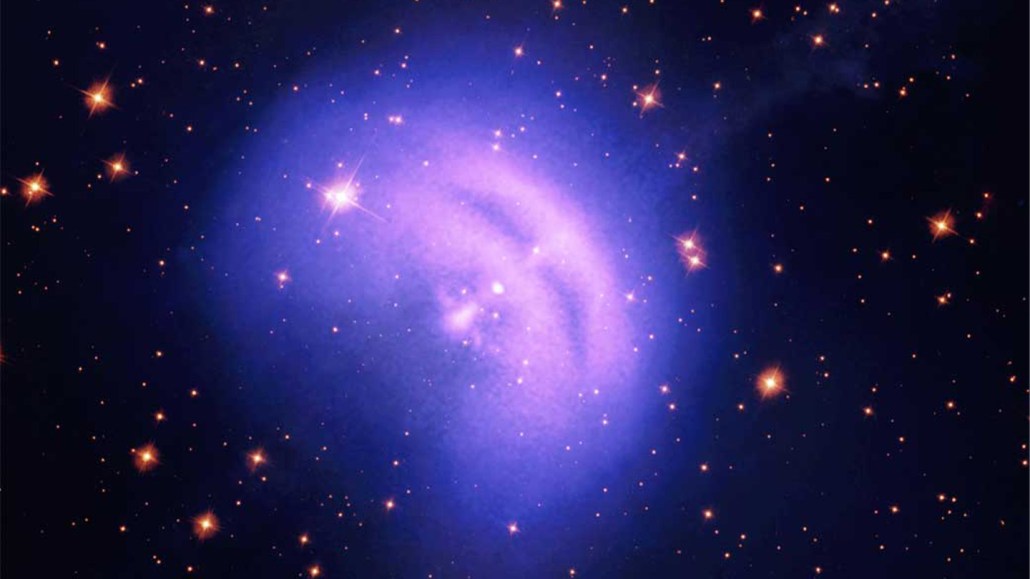 Vela (a.k.a. PSR B0833–45) is a radio, optical, X-ray- and gamma-emitting pulsar. It boasts the
highest-energy ever seen. It resides in its namesake the Vela Constellation.
Vela Pulsar
PSR J0835–4510
(ESA/Hubble)
PSR J0835–4510
(ESA/Hubble)
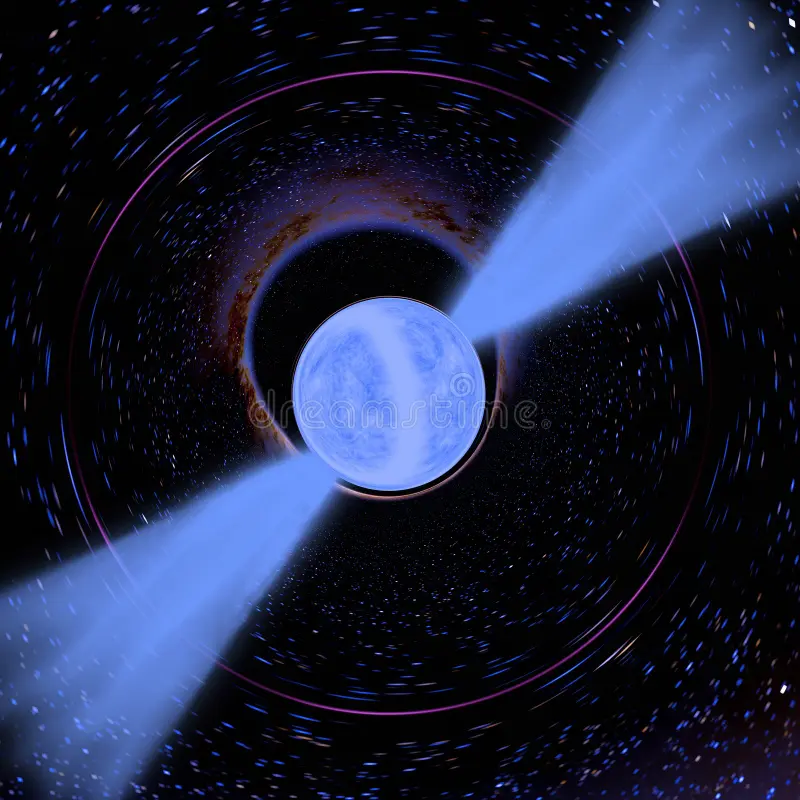 A.K.A. PSR B1913+16. Both are extremely dense neutron stars. They're
losing energy and spiraling inward toward each other.
Binary Pulsar
The Hulse-Taylor System
(ESA/Hubble)
The Hulse-Taylor System
(ESA/Hubble)
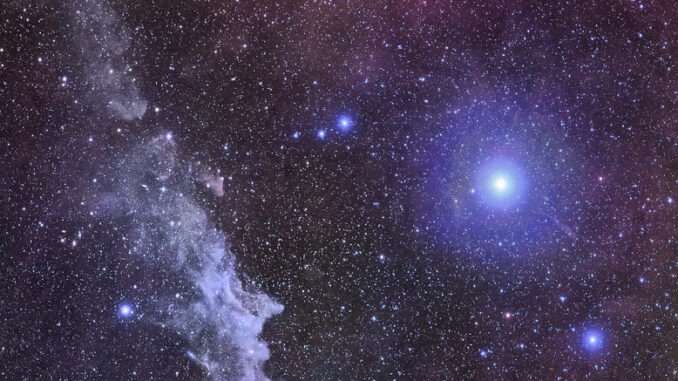 Rigel is the brightest star in the Orion Constellation. It's also the
7th. brightest star in the night sky. It out shines our sun 100,000 in
terms of luminosity.
Blue Supergiant
Rigel
(ESA/Hubble)
Rigel
(ESA/Hubble)
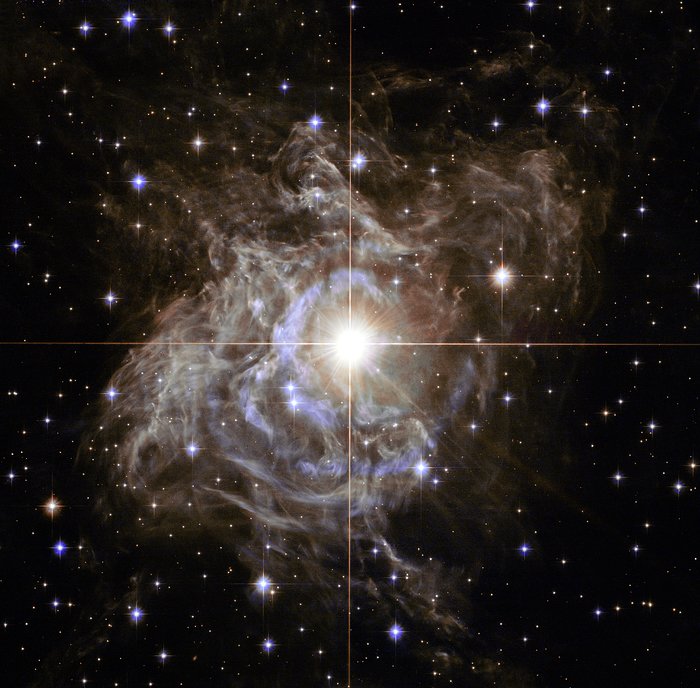 Every 40 days or so (41.5 days), Puppis' brightness varies by a factor of 5. It's
around 6,500 light-years away in the Puppis Constellation. Puppis is about
200 times bigger than the Sun.
Cepheid Variable Star
RS Puppis
(ESA/Hubble)
RS Puppis
(ESA/Hubble)
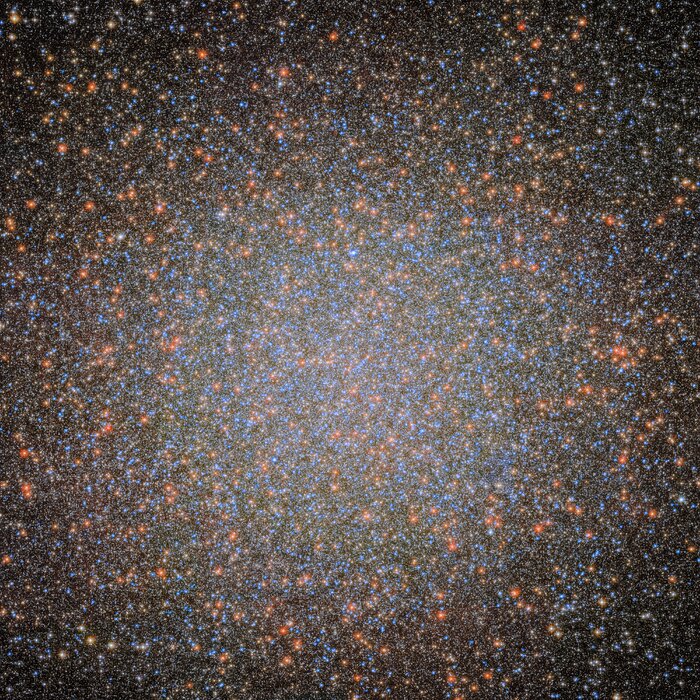 It's the brightest and largest cluster in our Milky Way galaxy. The ancients
saw it as a single star circa 2,000 years ago. It contains about ten million
stars.
Globular Cluster
Omega Centauri
(ESA/Hubble)
Omega Centauri
(ESA/Hubble)
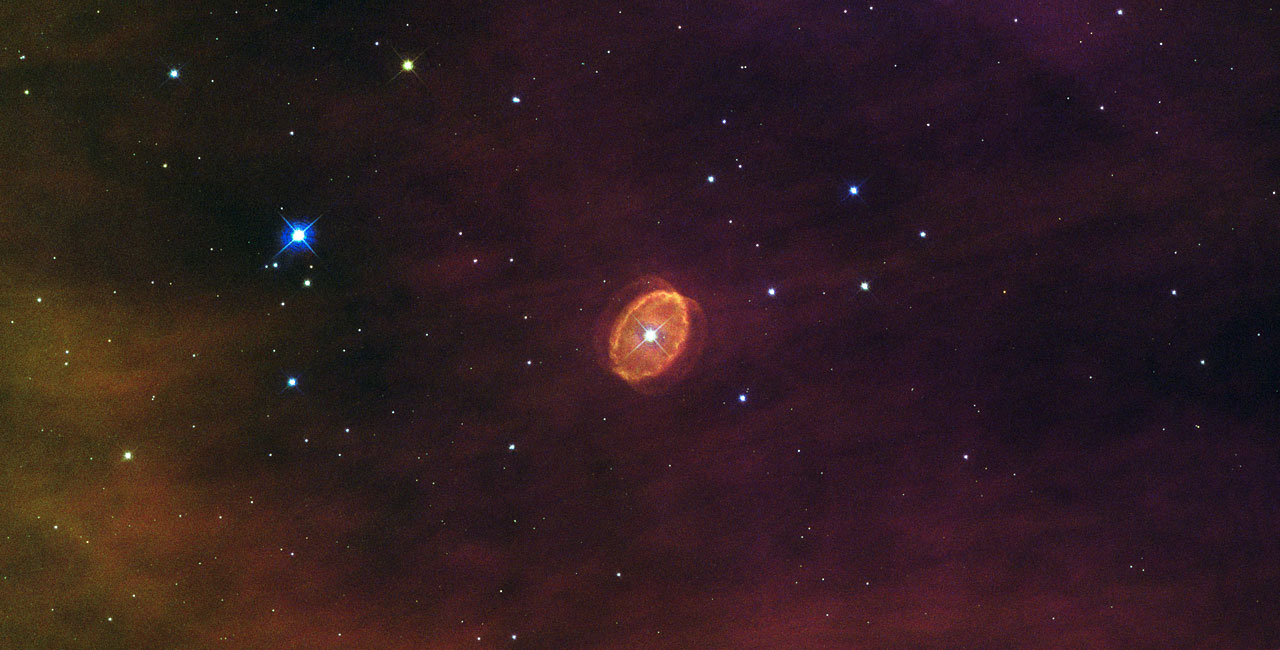 A.K.A. SBW1, is a rare beauty. A blue supergiant star resides in the center
of this nebula. A bright supernova is expected soon when big blue explodes.
It's located 20,000 light-years from Earth.
Blue Supergiant
[SBW2007] 1 Nebula
(ESA/Hubble)
[SBW2007] 1 Nebula
(ESA/Hubble)
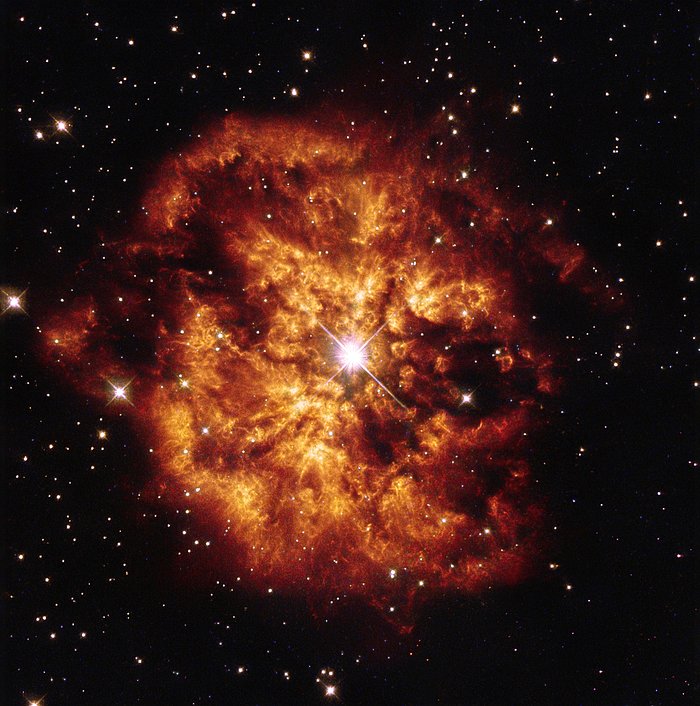 It's surrounded by the MI-67 nebula. Both are located in the constellation of Sagitta.
Wolf–Rayet Star (center)
Hen 2-427
(ESA/WEBB)
Hen 2-427
(ESA/WEBB)
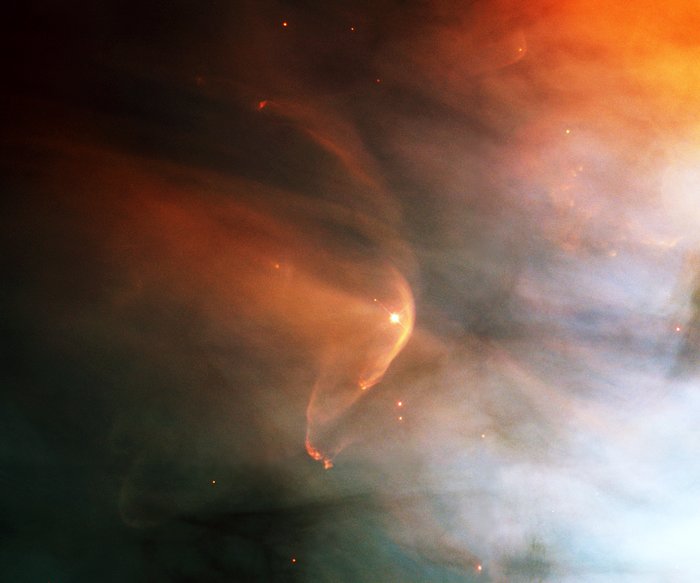 You can see the bow shock around the youngling. A bow shock is a glowing,
curved shock wave. It's created when a star reaches supersonic speeds.
Young Stellar Object
LL Orionis, NGC 1977 510
(ESA/Hubble)
LL Orionis, NGC 1977 510
(ESA/Hubble)
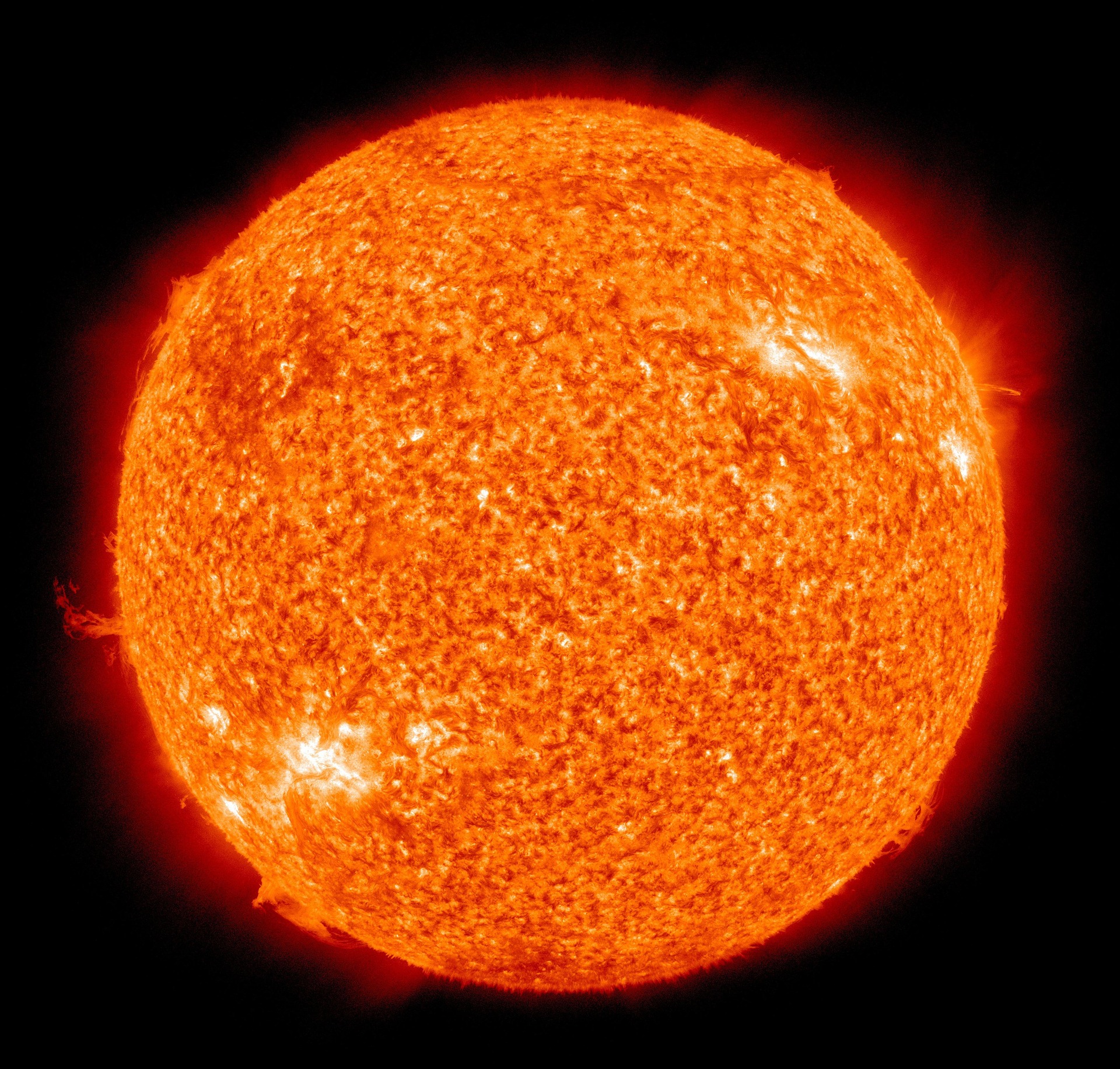 Our Star is half-way through her lifespan. She's about 5 billion years old.
She's medium sized compared to her fellow space companions. I think she's perfect.
G-Type Star
The Sun (G2V)
(Wiki Images)
The Sun (G2V)
(Wiki Images)
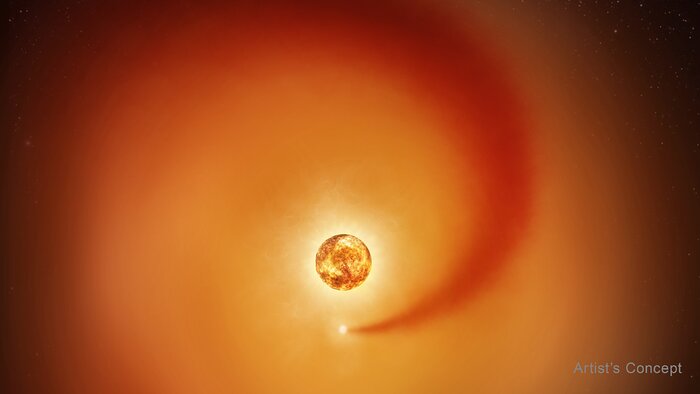 This artistic rendition features Betelgeuse and its companion star, Siwarha.
You can see the wake Siwarha leaves behind as she orbits the red supergiant.
Betelgeuse &
Siwarha
(ESA/Nasa)
Siwarha
(ESA/Nasa)
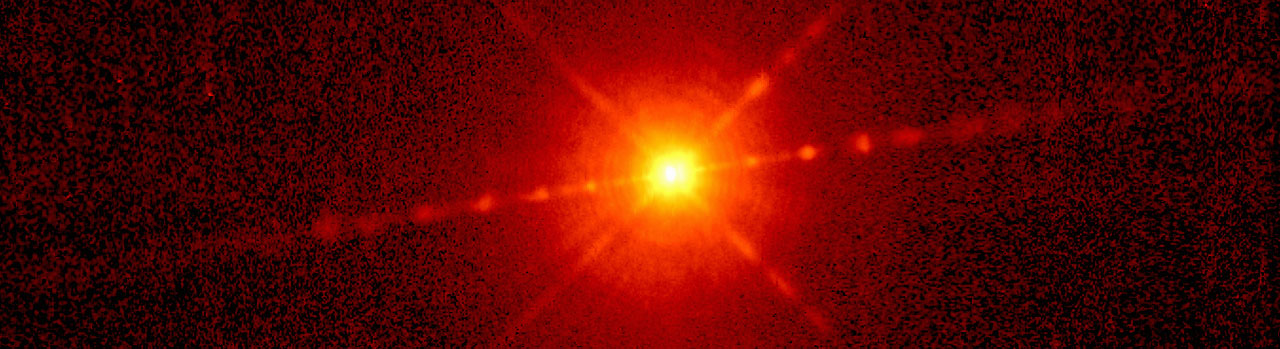 Hen 2-90 is an unclassified galactic B[e] star ([e] stands for emission lines). It has high speed, bipolar
jets. These jets move at speeds of 375,000 miles per hour (600,000 kilometers per hour).
Type-B[e] Star
Hen 2-90
(ESA/Hubble)
Hen 2-90
(ESA/Hubble)
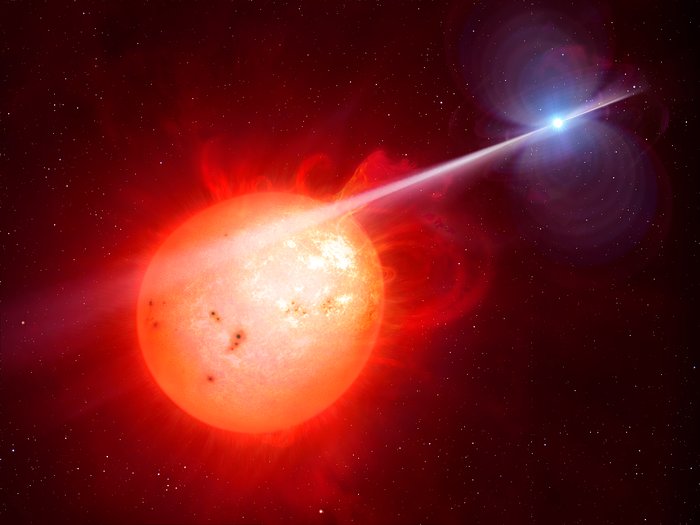 A spinning white dwarf beats up its companion red dwarf. It lashes out with blasts of radiation.
Every 1.97 minutes the whole system pulses. It beats from ultraviolet to radio. (Artist's Impression)
Exotic Binary System
AR Scorpii
(ESA/Nasa)
AR Scorpii
(ESA/Nasa)
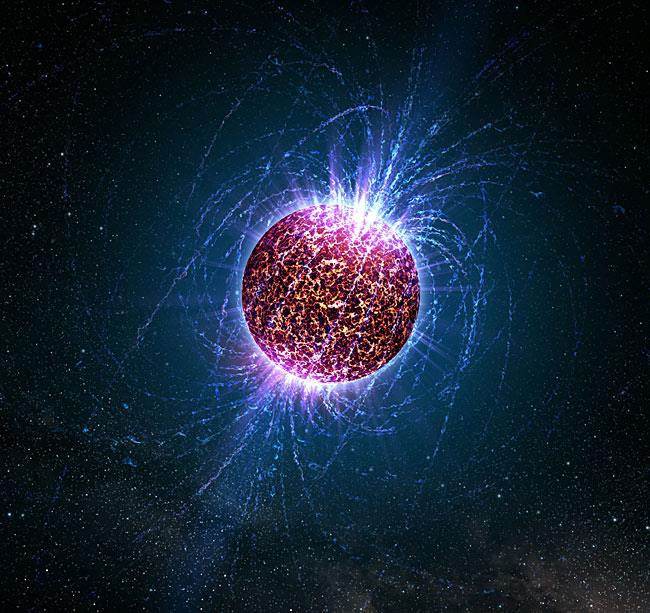 It is the first of its kind found in their namesakes globular star cluster.
It rotates ridiculously fast due to getting "spun up" by its companion star.
It identifies as a binary pulsar system.
Millisecond Pulsar
GLIMPSE-C01A
(ESA/Hubble)
GLIMPSE-C01A
(ESA/Hubble)
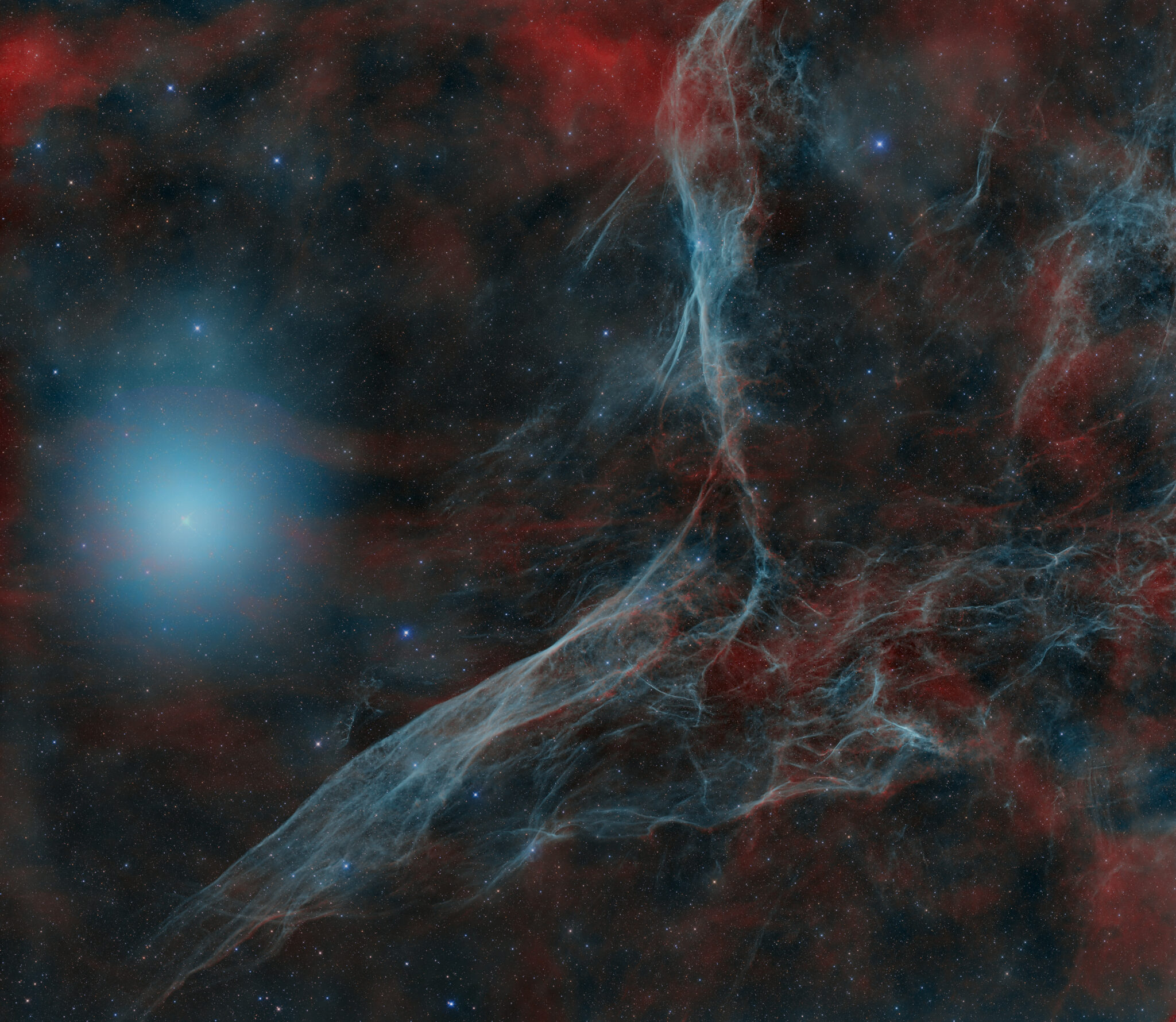 It's a multiple star system. The "it" couple are a massive Wolf-Rayet star &
a fiery blue supergiant. Every 78.5 days they circle each other.
Wolf-Rayet Star
γ² Velorum/Gamma Velorum
(ESA/Hubble)
γ² Velorum/Gamma Velorum
(ESA/Hubble)
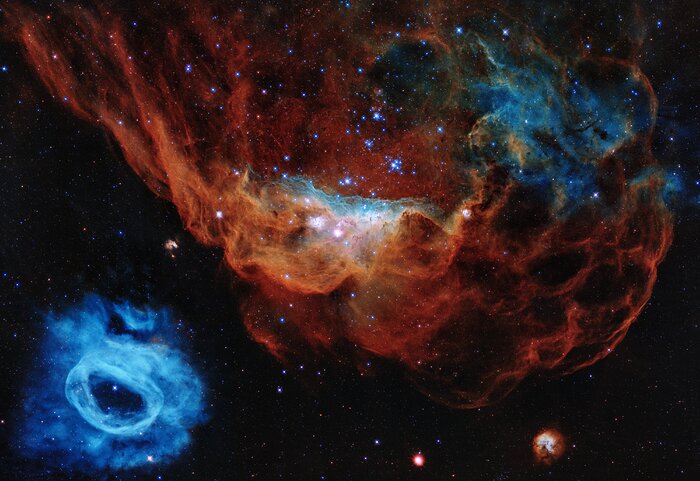 A.K.A. the Cosmic Reef. NGC 2014 is The Red Nebula. NGC 2020 is The Blue Nebula.
Their home, the Large Magellanic Cloud is about 163,000 light-years from Earth.
Large Magellanic Cloud
NGC 2014 & 2020 Nebulae
(ESA/Hubble)
NGC 2014 & 2020 Nebulae
(ESA/Hubble)
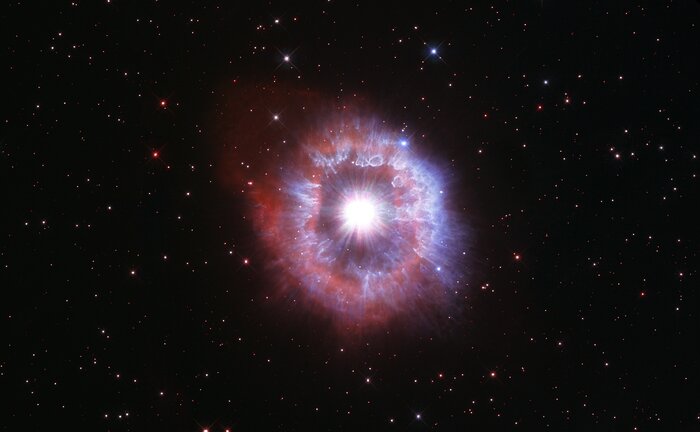 A Luminous Blue Variable (LBV) star located 20,000 light-years from Earth.
It shines one million times brighter than our Sun. It's expected to go out
as a supernova.
Wolf-Rayet Star
AG Carinae, V* AG Car
(ESA/Hubble)
AG Carinae, V* AG Car
(ESA/Hubble)
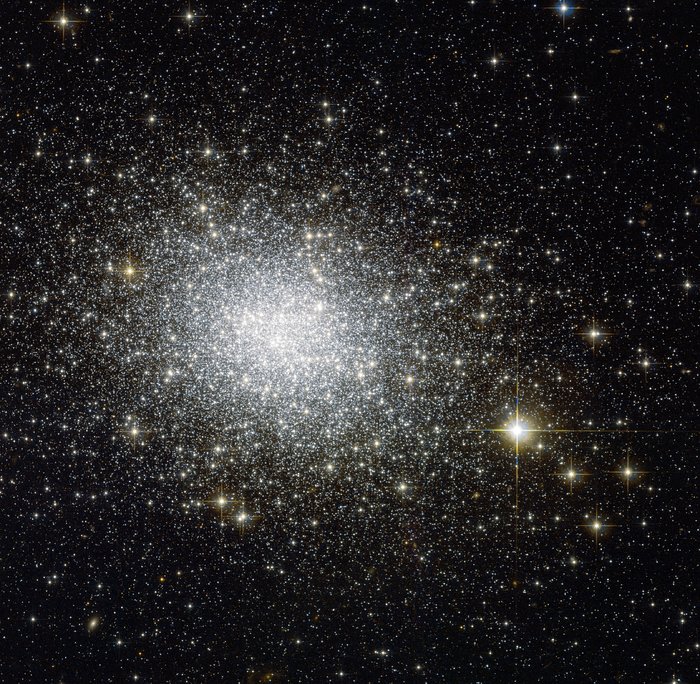 It resides in the Tucana Constellation, A.K.A.The Toucan. Our neighbour galaxy,
the Small Magellanic Cloud (SMC), is home to NGC 121. NGC 121 is around 10 billion
years old and the oldest cluster in its galaxy.
Globular Cluster
NGC 121
(ESA/Hubble)
NGC 121
(ESA/Hubble)
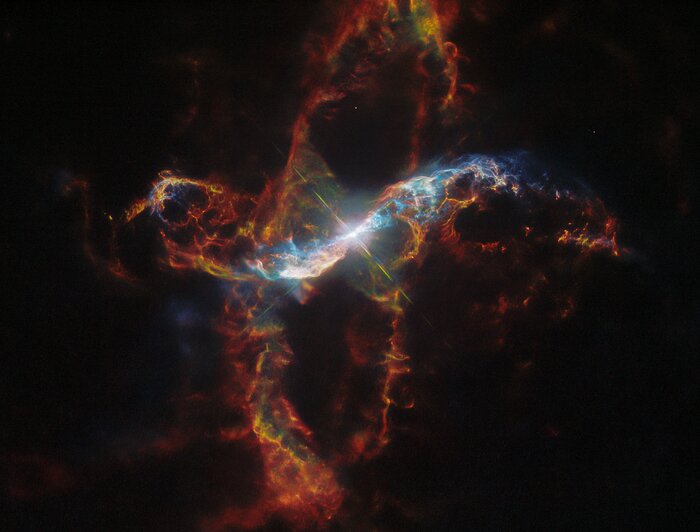 A red giant and a white dwarf reside in this binary system. They're surrounded by a dynamic nebula.
Symbiotic Binary Star
R Aquarii
(ESA/Hubble)
R Aquarii
(ESA/Hubble)
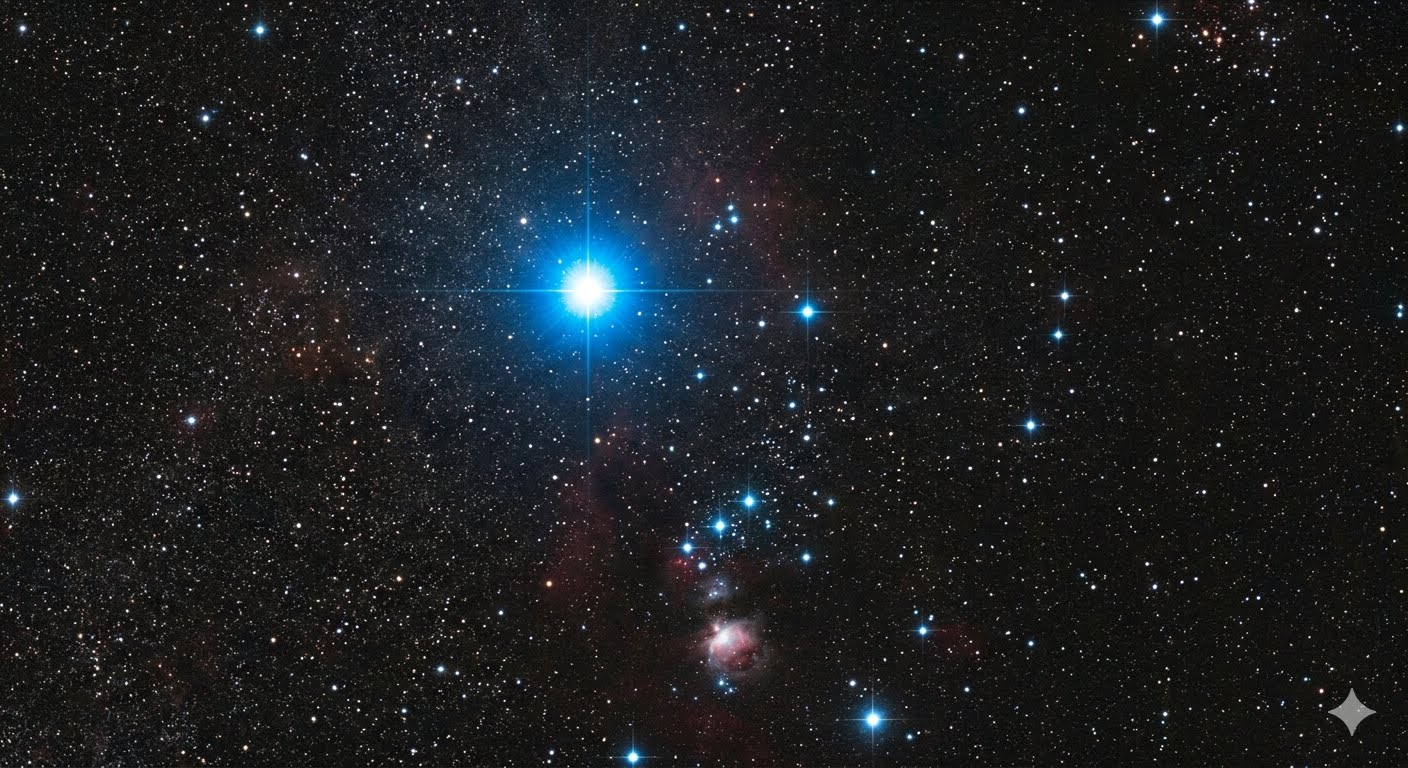 A.K.A. Gamma Orionis (γ Orionis) is the 3rd. brightest star in the Orion Constellation.
This giant/subgiant is one of the 25 brightest stars in our night sky. Her
name in Latin means "Female Warrior" and she's often called the Amazon Star.
Blue-white Giant
Bellatrix
(AI Generated)
Bellatrix
(AI Generated)
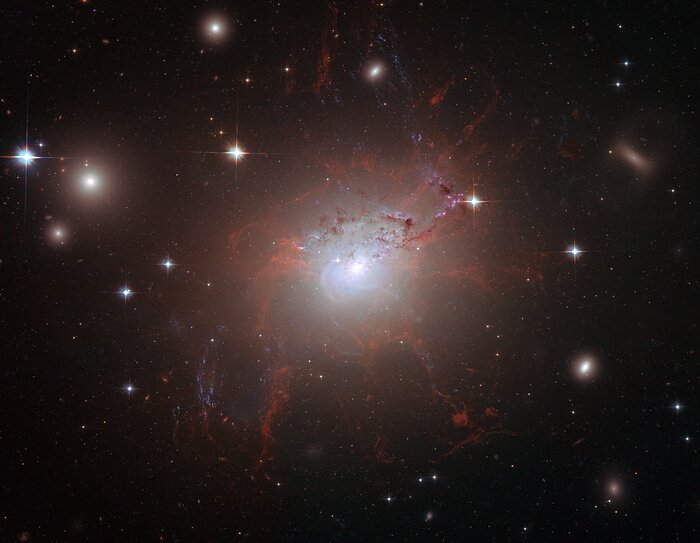 This "Magnetic Monster" has delicate filaments, individual threads of cool gas,
stretching up to 200,000 light-years. NGC 1275 features a Supermassive Black Hole
that likes to blow bubbles of energetic material into its surroundings.
Giant Elliptical Galaxy
NGC 1275
(ESA/Hubble)
NGC 1275
(ESA/Hubble)
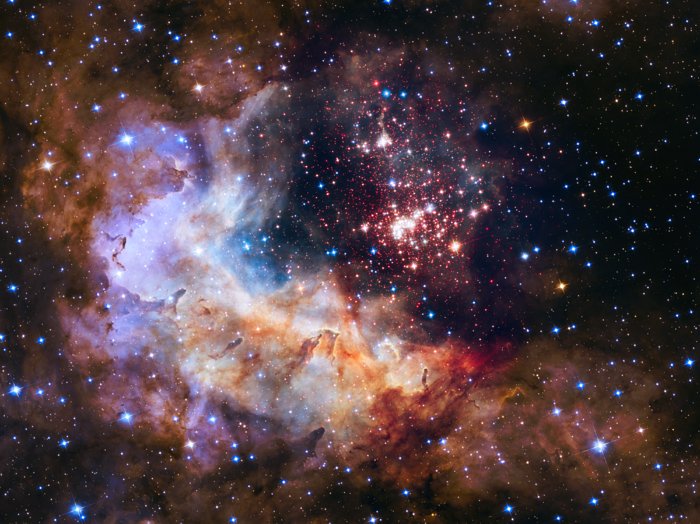 Roughly 3,000 stars call this giant cluster home. It's crammed with
some of the hottest & brightest stars in the Milky Way. There are
faint dwarf stars and brown dwarfs that reside in this cluster as well.
Young Star Cluster
Westerlund 2
(ESA/WEBB)
Westerlund 2
(ESA/WEBB)
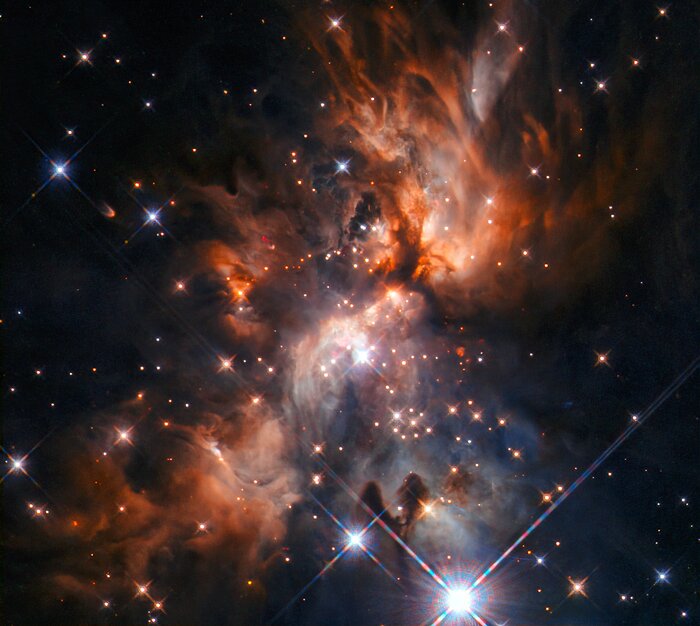 You can see a massive star forming at the center. The nursery is located in the constellation Gemini.
Stellar Nursery
AFGL 5180
(ESA/WEBB)
AFGL 5180
(ESA/WEBB)
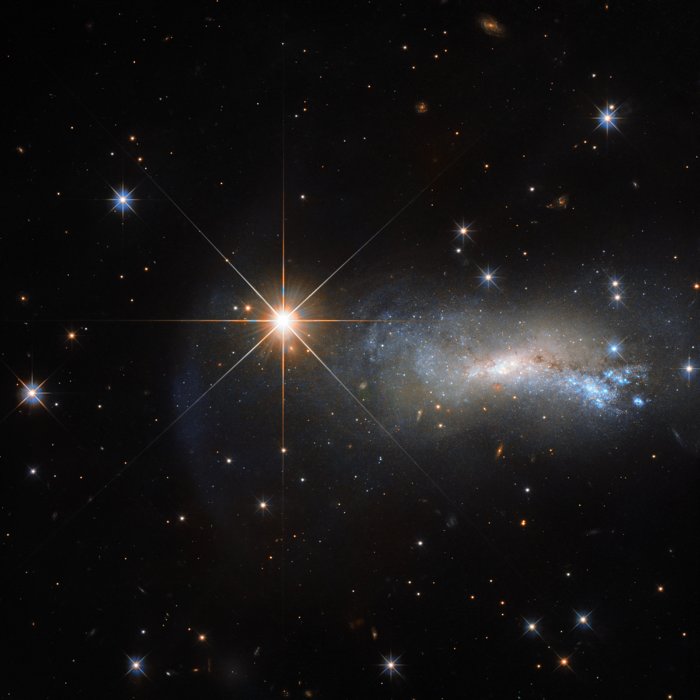 It's located in the Lacerta constellation, a.k.a. The Lizard.
Its background is the galaxy NGC 7250.
Stellar Scene Stealer
TYC 3203-450-1
(ESA/Hubble)
TYC 3203-450-1
(ESA/Hubble)
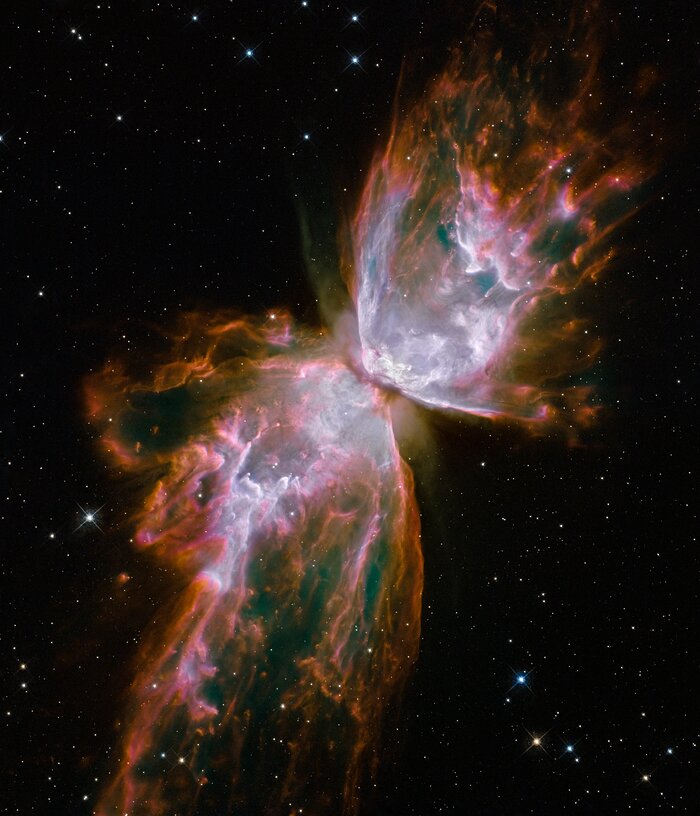 It resides in the Scorpius Constellation. Its "wings" are a roiling maelstrom of
super heated gas that races across space at about 950,000 kilometers per hour.
Bug/Butterfly Nebula
NGC 6302
(ESA/Hubble)
NGC 6302
(ESA/Hubble)
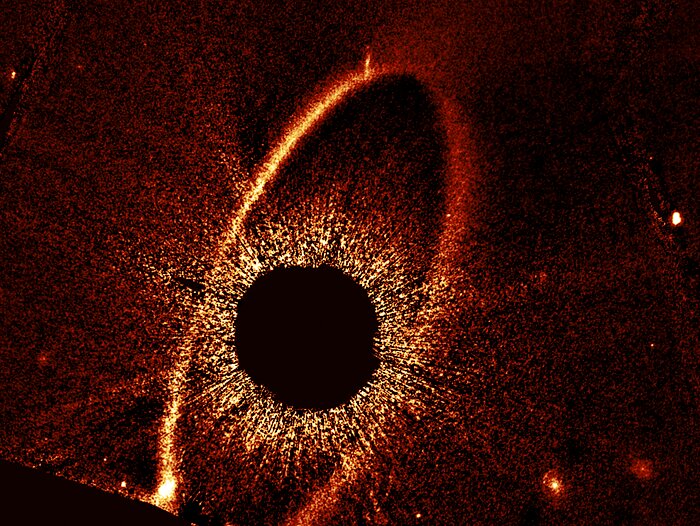 It resides in the constellation Piscis Austrinus. You can see the debris ring and
the dust clouds, cs1 & cs2 that surround the star. (cs1 was once thought to be a planet.)
Type-A star
Fomalhaut
(ESA/Nasa)
Fomalhaut
(ESA/Nasa)
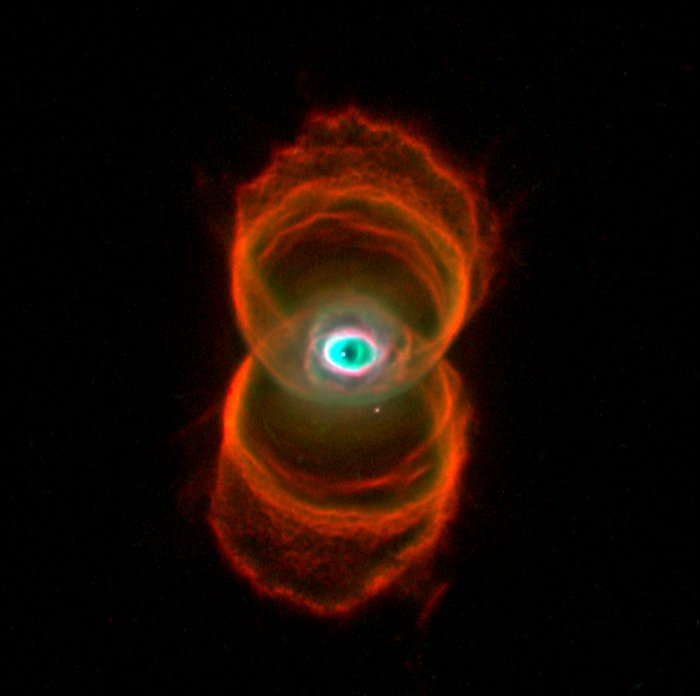 A.K.A. MyCn18 (the Engraved Hourglass Nebula) is a planetary nebula
(A glowing cloud of dust & gas shed by the dying star).
It resides in the southern constellation Musca.
It's about 8,000 light-years from Earth.
Hourglass Nebula
MyCn18
(ESA/Hubble)
MyCn18
(ESA/Hubble)