Ad Astra
M☉ Notation
Unit of measurement in
astronomy called the solar mass.
- M stands for Mass
- ☉ Astronomical Symbol/Sun
- 1 M☉, Benchmark unit
- Equal to mass of our Sun
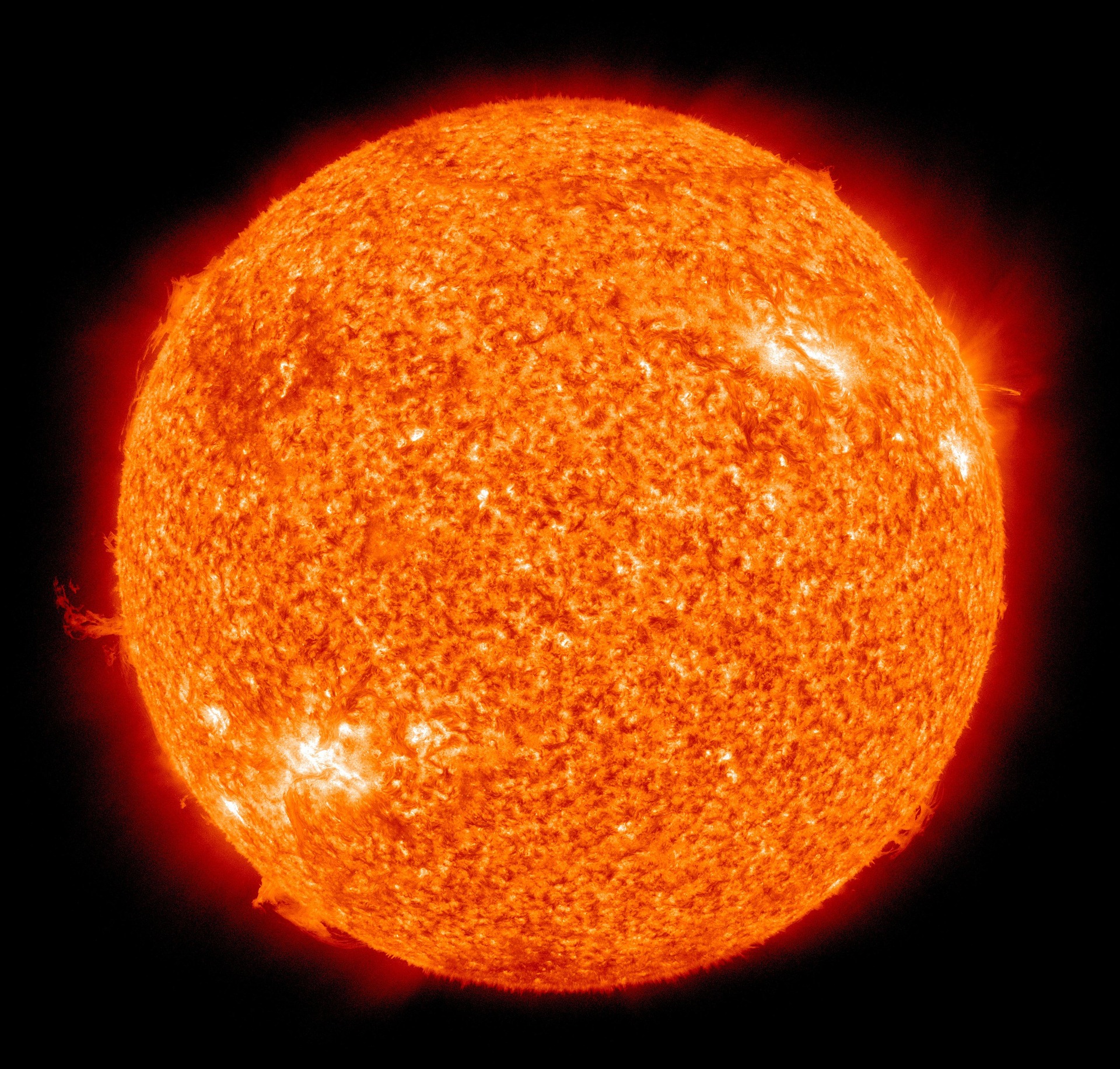
The Sun
(NASA/ESA)
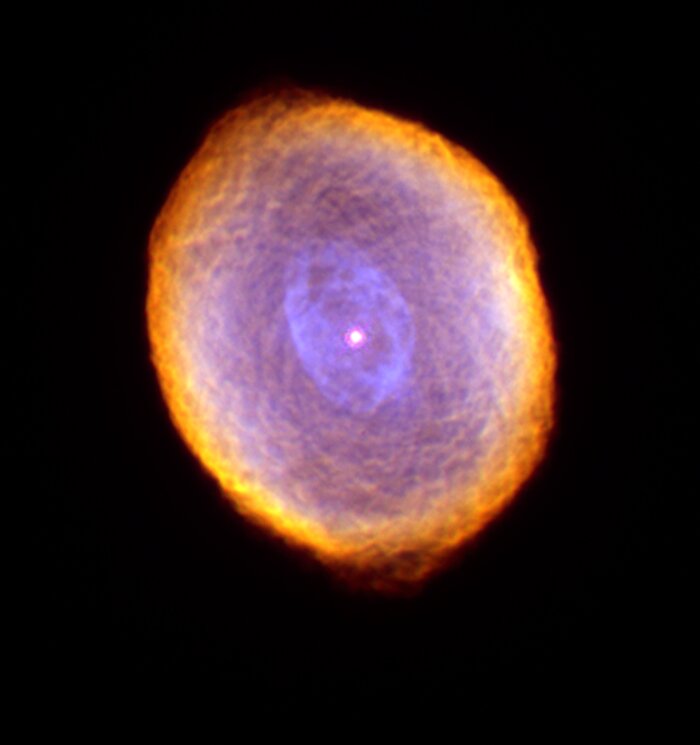
Spirograph Nebula
(NASA/ESA)
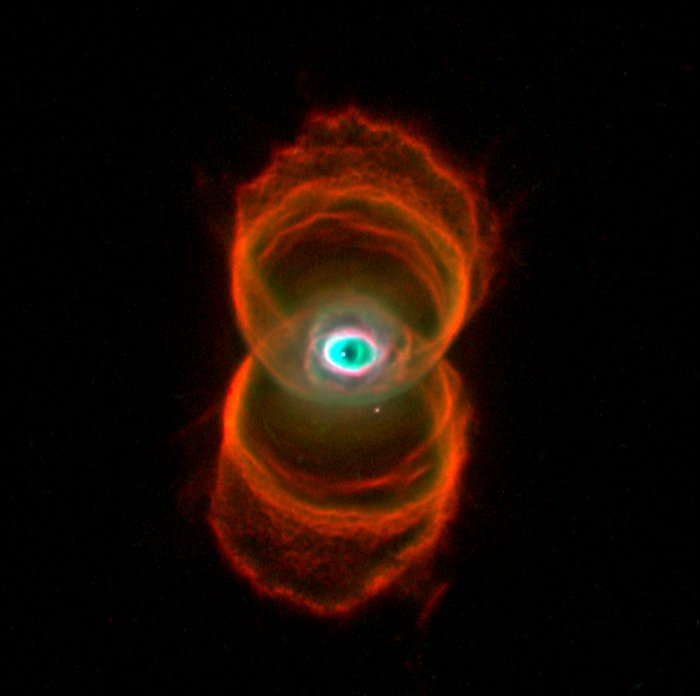
Hourglass Nebula
(NASA/ESA)
Binary Pulsar
Star Classification: Exotic/Remnant
Luminosity Classification: Power based
Temperature (K) : 1000000
Mass: 1.44–2.2 M☉ (up to the Tolman-Oppenheimer-Vokoff limit of ≈ 2.9 M☉). (Two neutron stars orbiting each other)
Elemental Composition: About 95% neutrons and a small percentage of protons and electrons, iron in its crust
Description: Pulsars that orbit a companion object. They are critical for testing theories of gravity, such as general relativity.
Birth: Forms when a neutron star exists in a gravitationally bound binary system, often after a supernova.
Life: Pulsar interacts with its companion; may accrete matter, change spin rate, or emit gravitational waves.
☠️ Death: Can merge with companion or collapse into a black hole.
Reincarnation: May become a millisecond pulsar if spun up by accretion.
Example: PSR B1913+16, PSR J0737−3039A/B
Luminosity Classes
Added to spectral types.
Indicates size & brightness:
- 0 or Ia+: Hypergiants
- I (Ia, Ib): Supergiants
- II: Bright Giants
- III: Regular Giants
- IV:Subgiants
- V: Main Sequence
- VI (sd): Subdwarfs
- D (VII): White Dwarfs
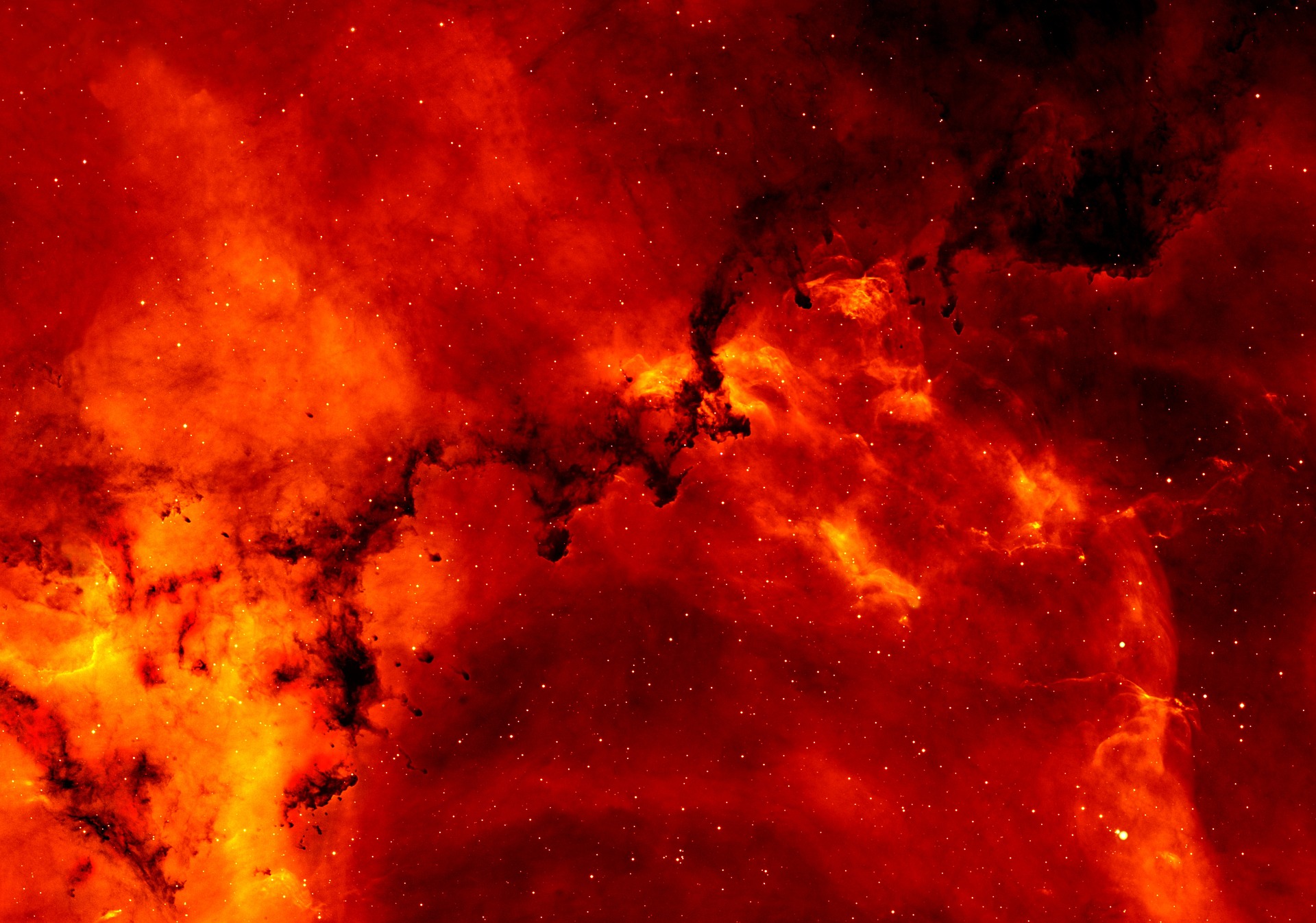
Galaxy in Orange
(Wiki Images)
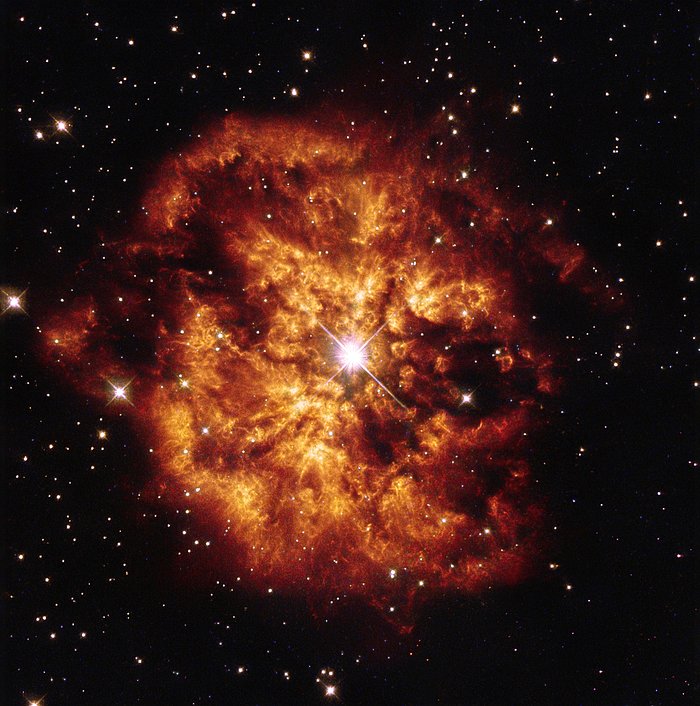
Wolf-Rayet Star
(NASA/ESA)
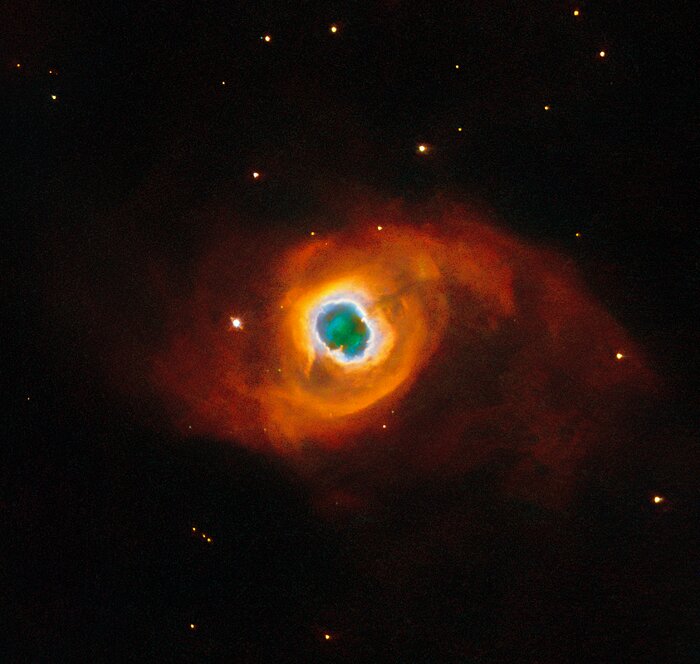
Planetary Nebula (PN K 4-55)
(NASA/ESA)